I hope you all had a great holiday season, and will have a safe and happy New Year to boot! It was a pretty good Christmas here. Now my wife and kids are halfway across the country enjoying some time with her brother and his family. So, here I sit in a quiet house with the next couple of days all to myself. In order to fill the deafening silence that now permeates the house, I've devoted some time to watch some Deep Space 9 (I'm nearly done with season 6, and therefore the series as a whole with only season 7 left to watch) and getting my copy of Descent 2nd Edition and the expansions organized (I just picked up The Trollfens expansion today). As is typical, DS9 got me thinking about my set of sci-fi rules that are in a constant state of revision and re-configuring, and organizing Descent got me thinking about another project that I've long thought about: designing a D&D inspired board game in the vein of Warhammer Quest.
I love dungeon crawling board games. Ever since I first played Hero Quest, I've been hooked. Warhammer Quest is still my all time favorite dungeon crawler. The tables that allowed the party to discover what happened to them whilst travelling to and from a dungeon, and what happens to them in town along with tables and charts of encounters in various locations made for a great time. Plus, WQ is deadly. Getting a character passed the first Battle Level is a badge of honor. Still, the game does have its flaws, the first being that is it so blasted deadly that it's hard to hold some players' interest after losing yet another BL1 character early on in a dungeon due to a random encounter with 1d3 Minotaurs! Anyway, I've got a ton of dungeon crawler board games from HQ and WQ to the D&D Board Game (and expansions) that were only released in Europe to the new D&D games, to Descent and its multiple expansions and some lesser known games like Darkworld and Dragonfire. That's not even counting the mountain of D&D minis and the unpainted minis. With all these games at my disposal, surely there would be a way to draw them all together to make one helluva dungeon crawler?
First off would be the rules. I would like leveling to high levels to be possible. Since its a board game, it needs to play fairly fast, which is oftentimes a downside to many dungeon crawler board games. There will be charts and lists to simulate random encounters. Plus, and this is the big one for me, the system should be able to handle both GM-driven and solo play.
Why solo play? For starters, it turns what can often times feel like a competitive game with one player running the monsters with the rest trying to defeat or outwit the GM's monsters and such into a cooperative encounter with all players getting to feel the danger of playing a character whose life is in constant peril. Plus, since my wife isn't big on these kind of games, and my sons are still a bit too young yet, solo play is often times the only way I can play.
I'm thinking of going with a d20-based system mixed with some of the class ideas found in Descent. This will allow for a variety of classes and allow the level of scaling that I prefer. Monsters would be the standard D&D fare, but some powers and such would have to be tweaked not only for solo/random play, but to also speed things up. Such as spell lists for monster spellcasters would have to be truncated/modified to in a set of powers. The same goes for certain powers like a vampire's bite.
Treasure would be randomized, likely using a modification of the random treasure tables I wrote up for Swords and Wizardry. Some items that have little use in the dungeon or that are hard to use in solo play will have to be left out, but by and large most items would be fine to use.
The dungeon tiles would be pulled from the various sets that I have, but I'd likely end up using WQ's since all the cards and tiles are already right there and ready to use.
Now, with all this musing, you'd think I'm starting to get something more substantial on paper, right? Wrong. I've tried working this idea for a long time now. While its something that I'd like to someday get off the ground, it's nothing more than mental calisthenics right now.
My primary focus in my writing is my sci-fi rules and setting. Work continues, and due to the quiet and alone time I'll have this week, I hope to make a lot more progress that I've been able to over the last couple of months.
So, with that, I'm going to get back to work. Until next time...
Showing posts with label House System. Show all posts
Showing posts with label House System. Show all posts
Friday, December 27, 2013


Monday, December 02, 2013
Slarecians: The First on Mars
Slarecians are an evil race of humanoids found in the Scarred Lands campaign setting for D&D 3 and 3.5 editions. I've long loved the mystery of these beings and how all that has been left behind by them either causes fear, kills without mercy, or sows discord. As I was starting work on my sci-fi setting, I knew that I wanted the first colonists on Mars to find that they weren't the first to set foot on the red planet. I wanted an alien race full of dark foreboding and mystery. The Slarecians are a perfect fit, and below is how I'm fitting them into my setting.

In 2036, the first Martian colony was established in a joint US and EU venture. A couple months after the establishment of Burrough's Promise, a surveying team found a strange metal arched doorway at the base of Olympus Mons. The metal was unlike anything that had ever been seen before. It was nearly impervious to harm and had an oily sheen not unlike what is seen when oil and water are combined. Completely by accident, the door was opened by one of the survey team. They retreated from the site and called in an archaeological team. Mission Control also had a security force go with the team to explore the opening. What was found was evidence that humans weren't the first species to visit and colonize Mars.
The site was dark and contained featureless walls of the same strange metal. Hallways created a maze like effect, but all seemed to eventually end in a central domed room. The central room was adorned with stone plinths and altars with strange, and as several members of the exploratory team recounted, insidious-looking runes carved into them. In the center of the chamber was a stone archway adorned with more of the wicked-looking runes. One of the researches touched a rune on one of the altars, which turned out to be control panel of some kind. The room was bathed in light from an unknown source; it seemed to come from everywhere. The runes on the central arch lit up as well. What happened next was not fully understood until after the Fraal made contact with humankind due to a total failure of the vid-comm systems each member of the team was equipped with. The bits that came through were disturbing to say the least. A number of creatures poured through the archway, which appeared to be a portal of some kind. Other than clips of screams, gunfire, and brief glances of the hunched, gaunt, humanoid monsters, nothing else was seen. Within seconds the life signs of all members flatlined. The security detail stationed at the opening to the site was ordered to cause an avalanche to block the opening since tests on the metal concluded that nothing less than a nuclear explosion would have much chance of affecting the metal.
The Olympus Mons "tomb" shocked the US and EU leaders; all of whom covered up all news of the discovery and the events that followed. It didn't take conspiracy theorists long to notice that a permanent UN military base was set up near Olympus Mons, however. Some of them even got close to what the UN was protecting/hiding. This disaster also colored perceptions of aliens by the US and EU, which is why relations with the Fraal were very cold and cautious to begin with.
It was the Fraal that provided the Earth governments with information that filled in the gaps on just what that site is. The Fraal had encountered other Slarecian ruins on other worlds in their history. What little they knew was that they were a seemingly long-dead Precursor species. All that remained of their culture was the ruins made out of what the Fraal called "Slarecian Steel". They culture, from what little they could discern was devoted to "esoteric sciences" like dimensional travel, torturous surgeries, horrific genetic testing, and psionic potential. Near as the Fraal had been able to piece together at the time was that they traveled the cosmos by way of the stone arches like the one found at the Olympus Mons site. The Fraal strongly cautioned the Earth governments to leave these sites alone. While the Fraal were also keenly interested in Slarecian research into psionics and would also like to know more about the history and culture of the species, every site, while different save for the existence of at least one stone archway and being made out of Slarecian Steel, is deadly beyond all comprehension. To this day, the Olympus Mons site has never been excavated, the defenses have only been strengthened over time.
Slarecian ruins have been found on other worlds the galaxy over, all of whom are instantly declared off-limits by any government ran by leaders with even an ounce of sanity. However, there are those that hear tales of untold riches in technology, science, or simply precious metals and jewels that tempt fate and try to explore a Slarecian site. Some of the horrors encountered are: Slarecian Ghouls, these twisted, savage beings are living creatures. Some scientists theorized that this is what became of the Slarecians, while others contest that they are likely the result of genetic testing or were specifically bred for defense. Either way, these creatures are the most commonly encountered threats in Slarecian ruins. Slarecian Gargoyles are automatons of psionically animated stone. Slarecian ruins are often adorned with statues of these winged creatures, as well as of Slarecians themselves, but only the winged statues are animated. They attack with intense savagery, but little cunning, unlike Slarecian Ghouls. One of the most insidious dangers is the Language Virus. This is a psionically spread virus that breaks down the ability of those affected to understand what anyone else is saying. So far, no cure has been found for the disease, and thanks to the ability for the virus to spread via psionic energy any who contract the disease, especially psions whose mastery of psionics only increases the transmission range, are either killed or simply left behind.
Many Slarecian ruins are destroyed by orbital barrages when discovered, so those that wish to try and profit from such sites typically have to work fast. There are credits to be made plundering Slarecian ruins even in spite of the dangers. Slarecian items are powerful in the hands of a psion and go for high prices on the Black Market (the sale of such items is banned by most stellar nations). Some psions have found chambers that when the correct rune is activated, allows them to expand their psionic potential with relative ease. Even Concord scientists would love to study the Portal Arches found at every Slarecian ruin site. The possibility of being able to unlock dimensional travel is hard to resist.
It is the possibility of dimensional travel that leads many to believe that the Slarecians are still out there somewhere, but only the insane would ever want to meet one.

In 2036, the first Martian colony was established in a joint US and EU venture. A couple months after the establishment of Burrough's Promise, a surveying team found a strange metal arched doorway at the base of Olympus Mons. The metal was unlike anything that had ever been seen before. It was nearly impervious to harm and had an oily sheen not unlike what is seen when oil and water are combined. Completely by accident, the door was opened by one of the survey team. They retreated from the site and called in an archaeological team. Mission Control also had a security force go with the team to explore the opening. What was found was evidence that humans weren't the first species to visit and colonize Mars.
The site was dark and contained featureless walls of the same strange metal. Hallways created a maze like effect, but all seemed to eventually end in a central domed room. The central room was adorned with stone plinths and altars with strange, and as several members of the exploratory team recounted, insidious-looking runes carved into them. In the center of the chamber was a stone archway adorned with more of the wicked-looking runes. One of the researches touched a rune on one of the altars, which turned out to be control panel of some kind. The room was bathed in light from an unknown source; it seemed to come from everywhere. The runes on the central arch lit up as well. What happened next was not fully understood until after the Fraal made contact with humankind due to a total failure of the vid-comm systems each member of the team was equipped with. The bits that came through were disturbing to say the least. A number of creatures poured through the archway, which appeared to be a portal of some kind. Other than clips of screams, gunfire, and brief glances of the hunched, gaunt, humanoid monsters, nothing else was seen. Within seconds the life signs of all members flatlined. The security detail stationed at the opening to the site was ordered to cause an avalanche to block the opening since tests on the metal concluded that nothing less than a nuclear explosion would have much chance of affecting the metal.
The Olympus Mons "tomb" shocked the US and EU leaders; all of whom covered up all news of the discovery and the events that followed. It didn't take conspiracy theorists long to notice that a permanent UN military base was set up near Olympus Mons, however. Some of them even got close to what the UN was protecting/hiding. This disaster also colored perceptions of aliens by the US and EU, which is why relations with the Fraal were very cold and cautious to begin with.
It was the Fraal that provided the Earth governments with information that filled in the gaps on just what that site is. The Fraal had encountered other Slarecian ruins on other worlds in their history. What little they knew was that they were a seemingly long-dead Precursor species. All that remained of their culture was the ruins made out of what the Fraal called "Slarecian Steel". They culture, from what little they could discern was devoted to "esoteric sciences" like dimensional travel, torturous surgeries, horrific genetic testing, and psionic potential. Near as the Fraal had been able to piece together at the time was that they traveled the cosmos by way of the stone arches like the one found at the Olympus Mons site. The Fraal strongly cautioned the Earth governments to leave these sites alone. While the Fraal were also keenly interested in Slarecian research into psionics and would also like to know more about the history and culture of the species, every site, while different save for the existence of at least one stone archway and being made out of Slarecian Steel, is deadly beyond all comprehension. To this day, the Olympus Mons site has never been excavated, the defenses have only been strengthened over time.
Slarecian ruins have been found on other worlds the galaxy over, all of whom are instantly declared off-limits by any government ran by leaders with even an ounce of sanity. However, there are those that hear tales of untold riches in technology, science, or simply precious metals and jewels that tempt fate and try to explore a Slarecian site. Some of the horrors encountered are: Slarecian Ghouls, these twisted, savage beings are living creatures. Some scientists theorized that this is what became of the Slarecians, while others contest that they are likely the result of genetic testing or were specifically bred for defense. Either way, these creatures are the most commonly encountered threats in Slarecian ruins. Slarecian Gargoyles are automatons of psionically animated stone. Slarecian ruins are often adorned with statues of these winged creatures, as well as of Slarecians themselves, but only the winged statues are animated. They attack with intense savagery, but little cunning, unlike Slarecian Ghouls. One of the most insidious dangers is the Language Virus. This is a psionically spread virus that breaks down the ability of those affected to understand what anyone else is saying. So far, no cure has been found for the disease, and thanks to the ability for the virus to spread via psionic energy any who contract the disease, especially psions whose mastery of psionics only increases the transmission range, are either killed or simply left behind.
Many Slarecian ruins are destroyed by orbital barrages when discovered, so those that wish to try and profit from such sites typically have to work fast. There are credits to be made plundering Slarecian ruins even in spite of the dangers. Slarecian items are powerful in the hands of a psion and go for high prices on the Black Market (the sale of such items is banned by most stellar nations). Some psions have found chambers that when the correct rune is activated, allows them to expand their psionic potential with relative ease. Even Concord scientists would love to study the Portal Arches found at every Slarecian ruin site. The possibility of being able to unlock dimensional travel is hard to resist.
It is the possibility of dimensional travel that leads many to believe that the Slarecians are still out there somewhere, but only the insane would ever want to meet one.
Wednesday, November 27, 2013
The Article that Changed it All
Like many sci-fi fans, I take great interest in astronomy and the goings on of the world's various space agencies. Thanks to a link on the Stars Without Number Facebook Page (here is the link), I'm changing a key element of not only my sci-fi setting, but also the rules that I'm working on. Essentially, NASA could very well be on their way to creating a "warp drive." The current work is based on a paper written in 1994 by physicist Miguel Alcubierre. By creating a bubble in space/time behind a starcraft and a space/time sink in front of the craft, a starship can be propelled through space fast faster than the speed of light, but since the space around the starcraft is unchanged it is not breaking the speed of light itself and therefore not meeting with a very messy end. The idea was scrapped as unfeasible due to the mass energy needed to subject enough force on space/time would be equal to that found in Jupiter. However, further research shows that with some tweaks to the Alcubierre Drive, the mass energy needed may only be around 1600 pounds of mass energy.
If this research yields practical results in testing, this means that we could travel the 4.3 light years to Alpha Centauri in weeks rather than entire generations living and dying on the journey. Day trips to Mars (or anywhere else in the solar system for that matter) would become feasible. We could easily harvest resources from the asteroids, moons, and planets throughout the solar system and beyond. Seeing how quick new technology can develop (as stated in the article, we went from only being able to generate 5 Watts of power via nuclear fission to 4 Megawatts in a year), if the practical tests yield the desired results, we could be traversing the stars before we know it. Just thinking of the economic, political, sociological, and even theological (should we happen to find proof that life exists elsewhere in the galaxy, that is) ramifications begins to blow my mind. Sure, this tech is all theoretical now, but the very idea that such travel is at least mathematically possible is exciting in the extreme.
If the Alcubierre Drive becomes reality, it's just another in a long line of technological advances that have been predicted by Star Trek (at least in some small way). Those shows continually show that they were ahead of their time.
What does all of this mean to my setting and system? Well, I'm scrapping the idea of Drillspace and the Elder Relays. Warp Drives are now the principle means of transportation throughout the galaxy. I may still use Relays, but they will be an invention of the current species roaming the galaxy other than some unknown ancient species. This means I need to go back and re-write some aspects of the setting background, since the Elder Relays were an integral part of the setting. Plus, the removing of the limitations of travel via Drillspace will have significant ramifications on the setting as well. That's not to say that I won't have limits to what speeds an Alcubierre Drive can attain, but space travel will be a lot more straight-forward, safer, and simpler.
We truly do live in an exciting age!
If this research yields practical results in testing, this means that we could travel the 4.3 light years to Alpha Centauri in weeks rather than entire generations living and dying on the journey. Day trips to Mars (or anywhere else in the solar system for that matter) would become feasible. We could easily harvest resources from the asteroids, moons, and planets throughout the solar system and beyond. Seeing how quick new technology can develop (as stated in the article, we went from only being able to generate 5 Watts of power via nuclear fission to 4 Megawatts in a year), if the practical tests yield the desired results, we could be traversing the stars before we know it. Just thinking of the economic, political, sociological, and even theological (should we happen to find proof that life exists elsewhere in the galaxy, that is) ramifications begins to blow my mind. Sure, this tech is all theoretical now, but the very idea that such travel is at least mathematically possible is exciting in the extreme.
If the Alcubierre Drive becomes reality, it's just another in a long line of technological advances that have been predicted by Star Trek (at least in some small way). Those shows continually show that they were ahead of their time.
What does all of this mean to my setting and system? Well, I'm scrapping the idea of Drillspace and the Elder Relays. Warp Drives are now the principle means of transportation throughout the galaxy. I may still use Relays, but they will be an invention of the current species roaming the galaxy other than some unknown ancient species. This means I need to go back and re-write some aspects of the setting background, since the Elder Relays were an integral part of the setting. Plus, the removing of the limitations of travel via Drillspace will have significant ramifications on the setting as well. That's not to say that I won't have limits to what speeds an Alcubierre Drive can attain, but space travel will be a lot more straight-forward, safer, and simpler.
We truly do live in an exciting age!
Sunday, October 20, 2013
House System Table of Contents
I'm knee deep in getting my house system (a hack of SWN, Alternity, and D20 Future) written up. As I was working on the Character Creation chapter I figured it would be a good idea to develop an outline of how I think everything should be organized. The main rulebook is going to be (hopefully) more of a toolbox with not much setting material. I just want to get the nuts and bolts finalized before I start adding on the paint and polish. Without further to do, here's my first draft of the Table of Contents for my House System:
1. Introduction
2. Character Creation
16. Xenobestiary
1. Introduction
2. Character Creation
- Overview of Character Creation
- Ability Score Generation
3. Species
- Standard Species
- Hybrid Species
- Player Generated Species
4. Skills
5. Perks & Flaws
6. Attributes
7. Equipment & Services
- Weapons
- Armor
- General Gear
- Basic Services
- Medical Services
8. Systems
- Combat
- Character Movement
- Vehicle Movement
- Space Tavel
- Space Combat
- Skills
- Environmental Effects
9. Psionics
10. Mutations
11. Cybernetics
12. Robots
- Robot Creation
- Robot Examples
- Robots as PC's
13. Vehicles
- Land
- Air
- Sea
- Space
- Mechs
- Space Stations
- Vehicle Creation
- Vehicle Examples
14. Experience & Achievement
15. GM Resources
- Planet Generation
- System Generation
- Sector Generation
- Alien Generation (Sentient and Non-Sentient)
- Factions
- Society Generation
The various examples will likely only be a few in each category. (So these rules won't sport all 60 base species available when I finally get a chance to actually play a game in the Galactic Concord setting.) Just enough to show off various techniques for creating aliens, vehicles, starships, and so on.
Friday, October 18, 2013
Hybrid Races

I've been working on the Character Creation chapter of my "house system" and I've gotten to the point where I want to make a decision about whether or not beings from different species can mate and therefore determine if I need to write any rules to govern such beings without having to write a million and one hybrid races individually. In the case of the Asari, the answer is a resounding "yes", but they don't necessarily need to mate in conventional sense to produce offspring and all young born from mating with an Asari are Asari in most every discernible way. Star Trek gives many examples of different species that can produce offspring: Humans and Betazoids, Humans and Klingons, Bajorans and Cardassians, and so on. Such pairings are also found in other series like Farscape (although Humans and Sebaceans are so similar genetically that it doesn't stretch the imagination too far) and Star Wars. Plus, since this setting is very much in the space opera vein as opposed to trying for a more hard sci-fi angle, it's not too far out of the norm to draw upon fantasy ideas like the half-elf, half-giant, and the like.
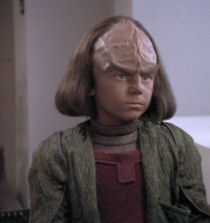
I'm inclined to allow such beings as supported in the setting, and I think I have a decent idea of a relatively easy way to handle these beings. However, there would have to be limits like only near-human species would be genetically compatible enough for such pairings. So there wouldn't be any Dralasite/Vulcans running around. Species that are decidedly more insectoid (Verpine), animalistic (Wookiee), or just weird (Founders, Dhamrin) simply wouldn't be allowed except as some GM plot device. After all, who am I to say that some Gene-Splicer couldn't create some sort of hoary abomination to unleash upon an unsuspecting galaxy?) I'm thinking of adding in a section to the species details that states whether or not they are genetically compatible with other species, much like what I'm doing to state whether or not a species can have psionic abilities, has a sufficiently malleable genetic structure for mutations, or has a physiology incompatible for cybernetics. Sex isn't typically something that I cover in my games (the times that the "brown-chicken, brown-cow" has occurred, it's all happened "off camera") and it's a subject that can make some people squeamish for a variety of reasons, so I'd like to handle the issue as gently as possible without tip-toeing around it like I'm writing for a pre-pubescent audience that giggles as the merest mention of anything slightly adult in nature. I'm not sure if I'll end up adding such an entry to the background information for each species, but in light of possibly (well, very likely) adding of the hybrid races rules it makes sense.

So I put the question to you, loyal reader of this rather haphazard blog, would such rules be a turn-off to a game even with the knowledge that the campaign is decidedly sci-fantasy (and even possibly a bit "gonzo" in spots) or would it still feel alright and keeping in the spirit even if the idea of different species mating and creating offspring is scientifically ridiculous?
There are also other species in the galaxy that can mate with other species similar to the Asari parthenogenesis or by means of genetic manipulation. The Satyrix (of Iron Kingdom fame) can mate with humans and other near-humans thanks to changes made to their genetic make-up to make up for the fact that they simply do not bear enough males in their society. The Valkyria (from the Savage Worlds setting, Slipstream) can mate with certain other species as well that are similar enough to their own genetic make-up. Therefore, there are instances beyond the Asari where other such beings can mate with others, but in each case the offspring is almost always the same as the mother.
Anyway, that's what I was working on at the moment and decided that I'd write about it. Any thoughts?
Thursday, October 17, 2013
SWN/Alternity/D20 Future Hack Update
Well, it's back to work for me and I didn't get to post nearly as much as I hoped. However, I haven't been totally unproductive. I've got a lot written and I think I've got some solutions to issues that have cropped up with making changes to the skill systems. I should be able to be to a playtestable state here pretty soon.
I was home during my time off with my 1-year old son, so I spent most of my time trying to keep him out of everything. During the quite times, I sat down with Jeff Rovin's "Aliens, Robots, and Spaceships" making notes for items that would make a good fit for the setting. I've got a lot to work on just from that book once I get the system to where I want it. I've also been making notes on an updated timeline for the setting. I want to get the dates nailed down for the major events in galactic history so that the background info is nice and coherent. As things progress, I'll be posting more of these updated setting details.
I was home during my time off with my 1-year old son, so I spent most of my time trying to keep him out of everything. During the quite times, I sat down with Jeff Rovin's "Aliens, Robots, and Spaceships" making notes for items that would make a good fit for the setting. I've got a lot to work on just from that book once I get the system to where I want it. I've also been making notes on an updated timeline for the setting. I want to get the dates nailed down for the major events in galactic history so that the background info is nice and coherent. As things progress, I'll be posting more of these updated setting details.
Friday, October 11, 2013
SWN/Alternity/D20 Future Hack: Character Creation Overview
This is still very much a work in progress, so things will likely change several times before I feel like it's truly ready for full-on play.
Character Creation Process
1. Generate Ability Scores: Roll 3d6 six times and apply those scores to the six ability scores (Strength, Dexterity, Constitution, Intelligence, Wisdom, and Charisma). This can either be done in order or by rolling the six scores and then assigning them to the desired stats to fit the player's vision for the character (this is, of course, up to the GM).
2. Select a Species: Choose one of the species available for play (if the campaign allows more than just humans, that is). Apply any ability score modifiers listed for the species, and make a note of the species' six free broad skills and any other special rules that may exist for that species.
3. Select a Class: Choose one of the classes available for play (Combat Specialist, Diplomat, Freelancer, or Technical Operative, Psions are also available for campaigns that allow the use of Psionic skills). Either roll for starting Hit Points, or apply the maximum (depending on which option the GM prefers for the campaign) to the HP total. Make a note of the class' Base Attack Bonus, Initiative bonus, Saving Throw bonuses, and Special Ability.
4. Determine Cybernetics and/or Mutations: If the campaign is making use of Cybernetics and/or Mutations and if those options are available for starting heroes, determine these options now and make a note of them and their effects on the character sheet. Characters that start play with cybernetics wave the cost in credits, but must still pay the skill point cost to ensure that their bodies are properly prepared for the installation of cybergear (see the Cybernetics section in the Equipment chapter for more information).
5. Purchase Skills: Starting characters have a number of skill points to spend on their starting Broad and Specialty skills based on their Intelligence score. Free Broad Skills listed for each species are considered automatic, so no cost is applied to those Broad Skills (though any Specialty skills will need to be purchased as normal). Specialty skills are capped at Rank 3 for starting characters. Make sure that if the character's species is one that allows a bonus to skill points or Broad Skill selections that you factor those into your purchase plan for the character. Also, make sure you note which skills are considered class skills for your character based on his class. Class skills cost one less skill point than the listed cost. Note that not all skill points need to be spent during character creation and can be saved for later.
6. Select Perks and Flaws: Starting characters may purchase (with Skill Points) up to three perks and select up to three flaws.
7. Select Attributes: Select one motivation, one moral attitude, and up to two personal traits for your character. These attributes help to define your character's personality.
8. Purchase Equipment: Each class has a number of credits (either generated randomly or by a preset number up to the GM) that they can spend on starting personal equipment.
9. Finish the Character Sheet: Make a note of the character's weapons and/or armor stats. Figure up the character's Defense Score and Attack Bonuses for their purchased weapons/attack forms. Make a note of the character's Psionic Energy Points, if playing a Psion or Diplomat/Psion. Name the character, and get ready for adventure!
There you have it, the Character Creation Process for my "Frankenstein's Monster" of an RPG system. A few things that I want to point out: the system of advancement for characters is the Alternity system. Characters will gain 1-3 points per adventure with a possible 1-2 bonus points depending on GM fiat based on in-game performance (clever play, great roleplaying, etc...). Once the character has accumulated enough Achievement Points, he/she can then spend those points on skills or bank them for later. Upon reaching an Achievement level, the character rolls for additional hit points, and may see an increase in one or more Saving Throw Bonuses.
There are three Saving Throw categories: Fortitude, Reflex, and Willpower.
Attacks are rolled against the target's Defense Score, which is 10 + Dexterity Modifier + Armor Modifier. If an attack rolls is equal to or higher than the target's Defense, damage is rolled. If the target is wearing armor, the Armor Score is subtracted from the damage before it is subtracted from the character's HP total.
Purchasing skill ranks conveys a +1 bonus to a skill roll using that skill. Broad Skills do not convey a bonus, but instead allow the character to use their Ability Score modifier on a general skill roll. For weapons and martial arts skills, ability score modifiers are always applied, but having a Broad Skill allows the character to use his Base Attack Bonus to modify the attack roll. Therefore, a character using a blaster pistol who does not have the Ranged Weapons Modern broad skill would only be able to apply his Dexterity bonus to the roll.
Most everything else will essentially stay as written in SWN except where it needs to be tweaked to be brought in line with the skill system.
Character Creation Process
1. Generate Ability Scores: Roll 3d6 six times and apply those scores to the six ability scores (Strength, Dexterity, Constitution, Intelligence, Wisdom, and Charisma). This can either be done in order or by rolling the six scores and then assigning them to the desired stats to fit the player's vision for the character (this is, of course, up to the GM).
2. Select a Species: Choose one of the species available for play (if the campaign allows more than just humans, that is). Apply any ability score modifiers listed for the species, and make a note of the species' six free broad skills and any other special rules that may exist for that species.
3. Select a Class: Choose one of the classes available for play (Combat Specialist, Diplomat, Freelancer, or Technical Operative, Psions are also available for campaigns that allow the use of Psionic skills). Either roll for starting Hit Points, or apply the maximum (depending on which option the GM prefers for the campaign) to the HP total. Make a note of the class' Base Attack Bonus, Initiative bonus, Saving Throw bonuses, and Special Ability.
4. Determine Cybernetics and/or Mutations: If the campaign is making use of Cybernetics and/or Mutations and if those options are available for starting heroes, determine these options now and make a note of them and their effects on the character sheet. Characters that start play with cybernetics wave the cost in credits, but must still pay the skill point cost to ensure that their bodies are properly prepared for the installation of cybergear (see the Cybernetics section in the Equipment chapter for more information).
5. Purchase Skills: Starting characters have a number of skill points to spend on their starting Broad and Specialty skills based on their Intelligence score. Free Broad Skills listed for each species are considered automatic, so no cost is applied to those Broad Skills (though any Specialty skills will need to be purchased as normal). Specialty skills are capped at Rank 3 for starting characters. Make sure that if the character's species is one that allows a bonus to skill points or Broad Skill selections that you factor those into your purchase plan for the character. Also, make sure you note which skills are considered class skills for your character based on his class. Class skills cost one less skill point than the listed cost. Note that not all skill points need to be spent during character creation and can be saved for later.
6. Select Perks and Flaws: Starting characters may purchase (with Skill Points) up to three perks and select up to three flaws.
7. Select Attributes: Select one motivation, one moral attitude, and up to two personal traits for your character. These attributes help to define your character's personality.
8. Purchase Equipment: Each class has a number of credits (either generated randomly or by a preset number up to the GM) that they can spend on starting personal equipment.
9. Finish the Character Sheet: Make a note of the character's weapons and/or armor stats. Figure up the character's Defense Score and Attack Bonuses for their purchased weapons/attack forms. Make a note of the character's Psionic Energy Points, if playing a Psion or Diplomat/Psion. Name the character, and get ready for adventure!
There you have it, the Character Creation Process for my "Frankenstein's Monster" of an RPG system. A few things that I want to point out: the system of advancement for characters is the Alternity system. Characters will gain 1-3 points per adventure with a possible 1-2 bonus points depending on GM fiat based on in-game performance (clever play, great roleplaying, etc...). Once the character has accumulated enough Achievement Points, he/she can then spend those points on skills or bank them for later. Upon reaching an Achievement level, the character rolls for additional hit points, and may see an increase in one or more Saving Throw Bonuses.
There are three Saving Throw categories: Fortitude, Reflex, and Willpower.
Attacks are rolled against the target's Defense Score, which is 10 + Dexterity Modifier + Armor Modifier. If an attack rolls is equal to or higher than the target's Defense, damage is rolled. If the target is wearing armor, the Armor Score is subtracted from the damage before it is subtracted from the character's HP total.
Purchasing skill ranks conveys a +1 bonus to a skill roll using that skill. Broad Skills do not convey a bonus, but instead allow the character to use their Ability Score modifier on a general skill roll. For weapons and martial arts skills, ability score modifiers are always applied, but having a Broad Skill allows the character to use his Base Attack Bonus to modify the attack roll. Therefore, a character using a blaster pistol who does not have the Ranged Weapons Modern broad skill would only be able to apply his Dexterity bonus to the roll.
Most everything else will essentially stay as written in SWN except where it needs to be tweaked to be brought in line with the skill system.
Sunday, October 06, 2013
SWN Hack Thoughts
I started looking back over what I've done with hacking up SWN to better fit what I want out of a sci-fi system. I'm thinking of switching gears to make the "house system" more in line with Alternity. I'm thinking of using the Broad/Specialized skill structure and cost per skill level as Alternity as well as the level benefits. This also means that character creation would likely end up being more point-based and may also see the inclusion of Perks and Disadvantages. Since the underlying system will still use SWN/OSR mechanics (although I use Ascending AC), I'll still need to work out some of the finer details, but I fully expect to keep things like Cybernetics and mutations pretty much as they are lined out in SWN and Other Dust.
One other change I'm considering is applying Alternity's Low Impact/High Impact/Energy damage resistance models. That means that a character's agility would be the primary thing keeping them from getting hurt with armor lessening damage. I've always liked that idea better than armor making a character harder to hit, but I've typically balked at using armor that way since it's more bookkeeping. It's something that I'm batting around and may likely change back as I test the changes.
I don't know that I'll ever be truly happy with the house system or find a system that fills most of my want list from a sci-fi system, but I hope to get the character creation and monster creation systems down in the near future so I can start in on statting out species and creatures and get down to the really fun part of world building for me, which is fleshing out the galaxy and overall setting details.
One other change I'm considering is applying Alternity's Low Impact/High Impact/Energy damage resistance models. That means that a character's agility would be the primary thing keeping them from getting hurt with armor lessening damage. I've always liked that idea better than armor making a character harder to hit, but I've typically balked at using armor that way since it's more bookkeeping. It's something that I'm batting around and may likely change back as I test the changes.
I don't know that I'll ever be truly happy with the house system or find a system that fills most of my want list from a sci-fi system, but I hope to get the character creation and monster creation systems down in the near future so I can start in on statting out species and creatures and get down to the really fun part of world building for me, which is fleshing out the galaxy and overall setting details.
Wednesday, September 18, 2013
Core Races
As I slowly make headway on my campaign for my SWN hack, I realize that I should eventually tackle what races I'll allow. As is common in many of my "kitchen sink" settings, I tend to allow a very wide array of character races for the players to choose from and the same will be here as well. However, unlike in many instances of running sci-fi games where I have a monster tome of races detailed for the system that I slap down on the table before the players with just marginal details outlined, I'm going to go with a more modest approach this time around. Since the campaign material is written largely from the point of view that they players will start out in Galactic Concord space and will be members of one of the various member species, I'm going to keep the races limited to those cultures that are members of the Galactic Concord. Plus, since this setting is a homage to my favorite sci-fi/fantasy settings, I'll further limit the choices. While this still makes for a long list, it's nowhere near the total amount of species that I would consider playable.
Here's what I have so far:
Humans (various cultures like Terran, Martian, Corellian, etc...)
From Mass Effect: Asari, Salarians, Turians Edit: Drell, Hanar, Volus, Elcor
From Star Trek: Vulcans, Andorians, Tellarites, Caitians, Bajorans, Edosians, Bolians, Betazoid, Deltans, Saurians, Napeans, Trills, and Talaxians
From Babylon 5: Narns, Centauri, and Minbari
From Farscape: Delvians, Ilanics, and Luxans
From Warhammer 40K: Eldar
From D&D: Dwarims (Dwarves), Gnorri (Gnomes)
From Star Wars: Wookiees, Cerean, Bothan, Rodian, Biths, Caamasi, Chagrians, Twi'leks, Duros, Ithorians, Kel Dors, Miraluka, Mon Calamari, Nautolans, Nosaurians, Quarrens, Sullustans, Zabraks, Shistavenens, and Zeltrons.
From Alternity: Fraal, Aleerins, Weren, T'sa, and Shesheyans
From D20 Modern: Moreaus
Finally, there are a selection of droids to choose from and mutations that can be applied to many species.
So 56 races that are considered "core" for the setting (not counting droids and mutants). I still need to get details written up for many of the species, but this at least allows me to focus myself. More species will be added as I go along and detail out the galaxy. It's a huge galaxy, and plenty of room for all sorts of creatures!
A quick edit, I forgot about 4 Mass Effect races that I'm going to allow.
Here's what I have so far:
Humans (various cultures like Terran, Martian, Corellian, etc...)
From Mass Effect: Asari, Salarians, Turians Edit: Drell, Hanar, Volus, Elcor
From Star Trek: Vulcans, Andorians, Tellarites, Caitians, Bajorans, Edosians, Bolians, Betazoid, Deltans, Saurians, Napeans, Trills, and Talaxians
From Babylon 5: Narns, Centauri, and Minbari
From Farscape: Delvians, Ilanics, and Luxans
From Warhammer 40K: Eldar
From D&D: Dwarims (Dwarves), Gnorri (Gnomes)
From Star Wars: Wookiees, Cerean, Bothan, Rodian, Biths, Caamasi, Chagrians, Twi'leks, Duros, Ithorians, Kel Dors, Miraluka, Mon Calamari, Nautolans, Nosaurians, Quarrens, Sullustans, Zabraks, Shistavenens, and Zeltrons.
From Alternity: Fraal, Aleerins, Weren, T'sa, and Shesheyans
From D20 Modern: Moreaus
Finally, there are a selection of droids to choose from and mutations that can be applied to many species.
So 56 races that are considered "core" for the setting (not counting droids and mutants). I still need to get details written up for many of the species, but this at least allows me to focus myself. More species will be added as I go along and detail out the galaxy. It's a huge galaxy, and plenty of room for all sorts of creatures!
A quick edit, I forgot about 4 Mass Effect races that I'm going to allow.
Monday, May 13, 2013
I just can't seem to leave well enough alone...
I was watching some Star Trek: TNG this weekend and it got me thinking about my house system for sci-fi again. During the development of the system I've found myself falling into the trap of adding too much to the system. I'm not really happy with certain aspects of the system when playtesting. It's one of those things that certain aspects sound good, but when implemented don't turn out quite right. Plus, with my recent work with the Swords & Wizardry rules, I've got to thinking about how I can change things around to make certain aspects easier to run.
First off, I'm taking a play out of the S&W rules and changing saves to a single save column.
Skills are going to be implemented in the same way as is presented in Basic D&D. Characters stat play with 4 skill selections (humans start with 6). Skill rolls are simply a d20 roll against the character's attribute score. A roll under the score succeeds, with a roll of 20 always failing. Skills don't increase other than using additional skill selections on the same skill. Each additional skill selection applied to a trained grants a -1 bonus to the skill roll. Class skill lists are still used with Cross Class skills requiring 2 selections to gain training. Classes are granted the chance to become proficient with weapons, which will now have a "Proficiency Rating" that is a bonus to attack rolls. Each class, however, will have a set list of weapon and armor proficiencies. Some classes, like Diplomat, may not be proficient with any weapons. Requiring them to spend a skill selection if they want to gain the proficiency rating bonus. For armor, each skill spent in armor allows the character to wear the next category of armor (Light/Medium/Heavy/Power), but all characters can wear light armor.
I'm removing all of the career builds for characters. It's a neat idea, but it really doesn't add that much to the ease of the character creation process. Plus, I find that builds such as that tend to get players to see them as really the only such option for that type of characters. Better to just get rid of them.
Psionics...I'm waffling a bit on this. I may go the standard SWN route, but the idea of scrapping the Psion class altogether in lieu of characters having a chance of having a psionic power, a single power, has some appeal.
Much of the rest of the work I've done will still be usable, but as I go through the changes more things may crop up.
First off, I'm taking a play out of the S&W rules and changing saves to a single save column.
Skills are going to be implemented in the same way as is presented in Basic D&D. Characters stat play with 4 skill selections (humans start with 6). Skill rolls are simply a d20 roll against the character's attribute score. A roll under the score succeeds, with a roll of 20 always failing. Skills don't increase other than using additional skill selections on the same skill. Each additional skill selection applied to a trained grants a -1 bonus to the skill roll. Class skill lists are still used with Cross Class skills requiring 2 selections to gain training. Classes are granted the chance to become proficient with weapons, which will now have a "Proficiency Rating" that is a bonus to attack rolls. Each class, however, will have a set list of weapon and armor proficiencies. Some classes, like Diplomat, may not be proficient with any weapons. Requiring them to spend a skill selection if they want to gain the proficiency rating bonus. For armor, each skill spent in armor allows the character to wear the next category of armor (Light/Medium/Heavy/Power), but all characters can wear light armor.
I'm removing all of the career builds for characters. It's a neat idea, but it really doesn't add that much to the ease of the character creation process. Plus, I find that builds such as that tend to get players to see them as really the only such option for that type of characters. Better to just get rid of them.
Psionics...I'm waffling a bit on this. I may go the standard SWN route, but the idea of scrapping the Psion class altogether in lieu of characters having a chance of having a psionic power, a single power, has some appeal.
Much of the rest of the work I've done will still be usable, but as I go through the changes more things may crop up.
Friday, March 29, 2013
Missed Creature Updates
Oops! I missed the Klixen and Thresher Maws in my update of creature stats I post earlier. Allow me to correct that!
Klixen
Size
|
Large
|
Skill
|
-
|
AC
|
15
|
Group
|
1d4+2
|
HD
|
4d10
|
Save
|
11+
|
AB
|
+2
|
Move
|
20’
|
Dmg
|
2d8 Fire Breath
|
INT
|
Animal
|
Klixen are a species of crab-like insectoids from the Krogan homeworld of Tuchanka, but the Krogan and xeno-merchants have caused them to be transplanted to other worlds as well. They are large, standing around 8 feet tall with a diameter of about 10 feet. Their shells are tough, but quickly become brittle once the creature is slain.
Klixen move slowly. Even though they sport nasty looking pinchers, they only use their fire breath (range of 15’) to bring foes down and then tear apart the fallen prey afterwards. They attack en masse and seek to overwhelm foes. Once slain, the chemical sacks in their bodies explode, dealing 3d6 damage to all within 10’ of the slain Klixen (Evasion save for half damage). Klixen themselves take only half damage from fire attacks, including those of other exploding Klixen.
If one can freeze a Klixen before it dies, and therefore explodes, the meat to be gained from such a creature is known to be very delicious and can be sold for a premium in many starports throughout the Concord and even the Krogan DMZ.
Thresher Maw
AC
|
20
|
Group
|
1
|
HD
|
17
|
Save
|
7+
|
AB
|
+17/+17
|
Move
|
50’ br.
|
Dmg
|
5d12 bite or 3d6 acid spit or Special
|
Morale
|
12
|
Thresher maws are subterranean carnivores that spend their entire lives eating or searching for something to eat. Threshers reproduce via spores that lie dormant for millennia, yet are robust enough to survive prolonged periods in deep space and atmospheric re-entry. As a result, thresher spores appear on many worlds, spread by previous generations of space travelers.
The body of a thresher never entirely leaves the ground; only the head and tentacles erupt from the earth to attack. In addition to physical attacks, threshers have the ability to project toxic chemicals and emit bursts of infrasound as a shockwave weapon.
The sonic shockwave attack can be made once every 5 rounds. It does 2d6 damage to anyone within 50’ of the Thresher Maw, and those affected must make a Physical Effect save or be dazed for 1d4 rounds. Ear plugs or other protection negates both the damage and the dazing effect.
Thresher Maws are so massive that they are considered to have 5 points of armor against non-heavy weapon attacks.
Updated Creature Stats
After "finalizing" the creature design rules for my home system, I've decided to go back and update the creatures that I've posted here to fall in line with the new set-up. A couple things that I'm noticing right off is that I'm probably going to need to increase many Attack Bonuses to factor in weapon skills. Also, I still haven't quite decided how I'm going to handle creature psionics yet. Plus, going through this process has alerted me to a few things that I need to address in other parts of the rules like the amount of Attack Bonus gain for putting points into Combat skills (no way is it going to be 1/1, probably +2/4) and I need to dial back the weapon damages for the added weapons in the gear chapter.
As always, these are works in progress, so they could change again!
As always, these are works in progress, so they could change again!
Collector Drone
Size
|
Medium
|
Skill
|
+3
|
AC
|
15
|
Group
|
1d8
|
HD
|
3d8 (13 hp)
|
Save
|
14+
|
AB
|
+2
|
Move
|
30’, Fly 50’ (see below)
|
Dmg
|
2d6 energy rifle or 1d6 claws
|
INT
|
Low
|
Collector drones are the standard Collectors that most people hear about when tales of this species are told. They are armed with strange, organic looking, energy rifles. They can fly across short distances for one round before needing to land. They can fly again after a round of rest and their flight comes with a very noticeable buzzing sound.
Collector Drones can be controlled by a Collector General. These “Harbingers” take on an appearance of nearly bursting with energy. When a Collector General takes direct control of a drone, use the Harbinger stats below.
Collector Drones have limited cognitive abilities, but they do have access to the Stealth skill, but use of this skill is only applicable while walking, not while flying.
“Harbinger” Drone
Size
|
Medium
|
Skill
|
+10
|
AC
|
15
|
Group
|
1
|
HD
|
5d8 (21 hp)
|
Save
|
13+
|
AB
|
+4
|
Move
|
30’
|
Dmg
|
2d6 energy rifle or 1d8 claws or 3d6 psionic blast
|
INT
|
High
|
Harbingers are Collector Drones in which the Collector General has assumed control off. The transformation takes 1 round, during which the Drone can take no action. Collector Generals only take control of undamaged drones. The drone takes on an appearance as if it were bursting with energy. This transformation destroys the drone’s wings, making it incapable of flight. This level of control can be maintained for only 20 minutes before drone is completely consumed by the psychic energies fueling it. The drone is killed even if control is released before this time is up. The energies reduce the drone to ash.
When dealing with other species, a Collector General assumes control of a Drone. Outside of meeting a General, this is the only way that other species are able to converse with Collectors.
In addition to the increased stats, Harbingers can fire a blast of psionic energy every other round instead of making a regular energy rifle attack. Plus, the energy in their shells grants them a short of personal shield that ignores 4 points of damage from every attack that hits it. This is unlike typical personal shields that will decay with each hit as this level of damage reduction stays constant. Finally, the appearance of a Harbinger has a bolstering effect on any drones within 100’ of the Harbinger, granting them a +1 bonus to attack and damage rolls while a Harbinger is active.
Collector Generals can only assume control of one Drone at a time. Once either a Harbinger is destroyed by combat or by the psychic energy used to assume control, they cannot create another Harbinger for 1d6 rounds.
Collector General
Size
|
Large
|
Skill
|
+15
|
AC
|
14
|
Group
|
1
|
HD
|
7d10 (36 hp)
|
Save
|
10+
|
AB
|
+3
|
Move
|
20’
|
Dmg
|
1d6 claws
|
INT
|
High
|
Collector Generals are the rarely seen leaders of Collector groups. They typically stay aboard their starships, directing the flow of combat from the safety of their command centers. It is unknown if these are the highest form of Collector life, but they are the highest form currently known.
Outside of being able to control a drone, Generals appear to have very little in the way of combat ability. If anyone should enter into combat with a General, it will attempt to flee as quickly as possible, directing drones to keep the attackers at bay until a safe distance can be reached. Generals cannot take any actions while in control of a drone, so they will only do so when assured of their safety.
Collector Web
Size
|
Large
|
Skill
|
-
|
AC
|
12
|
Group
|
1
|
HD
|
2d10 (11 hp)
|
Save
|
12+
|
AB
|
Not Applicable
|
Move
|
20’ hover
|
Dmg
|
None
|
INT
|
Non
|
Collector Webs are creations of the Collectors to go where their Seeker Swarms (see entry) either cannot go for some reason or have been neutralized. The webs are not really webs; they are small energy transmitters that distort space and time in a small distance around their epicenter not unlike a very weak singularity. Dark energy writhes and coalesces around the center that looks somewhat like a mass of living webs (though some have said it looks like a flurry of bat-like creatures swarming around a central point) stretching out to a radius of 20’. Anyone caught in this web is slowed down to half movement speed, and will automatically fail any Evasion save attempts. Collectors use these creations to aid in the capture and defeat of enemy forces. The Collectors themselves appear to be immune to the effects of the Collector Webs.
The only real defense Collector Webs have is that their center, the only part of a Collector Web that is solid and attackable, is difficult to discern due to the writhing dark energy field. Anyone attacking a Collector Web suffers a -2 penalty to their attack roll.
Geth Trooper
Size
|
Medium
|
Skill
|
+12
|
AC
|
13
|
Group
|
1d6
|
HD
|
3d8 (13 hp)
|
Save
|
14+
|
AB
|
+3
|
Move
|
30’
|
Dmg
|
2d8 pulse rifle
|
INT
|
Very
|
These are the standard Geth platforms that most people think of when hearing about Geth. They are equipped with pulse rifles and personal shields (5). If they take no actions during 1 round, geth troopers can instantly recharge their shields to full capacity. Most are armed with pulse rifles, but some also take to high ground with mag rifles to snipe at targets.
Geth Troopers are skilled in Computers, Stealth, and Tech (robotics).
Geth Armature
Size
|
Huge
|
Skill
|
-
|
AC
|
18
|
Group
|
1
|
HD
|
10d10 (51 hp)
|
Save
|
8+
|
AB
|
+7
|
Move
|
20’
|
Dmg
|
3d6 heavy pulse guns or 4d8 siege cannon
|
INT
|
Very
|
Geth Armatures are anti-personnel light walkers armed with heavy pulse rifles and a siege cannon. Siege cannons can only be fired once every 5 rounds. Against non-heavy weaponry, geth armatures are considered to have Armor 6. They are also equipped with Personal Shields (7).
Geth Colossus
Size
|
Gargantuan
|
Skill
|
-
|
AC
|
20
|
Group
|
1
|
HD
|
15d12 (91 hp)
|
Save
|
4+
|
AB
|
+17
|
Move
|
20’
|
Dmg
|
3d6 heavy pulse guns or
5d10 heavy siege cannon
|
INT
|
Very
|
Geth Colossi are heavy walkers armed with heavy pulse guns and a devastating heavy siege cannon. Siege cannons can only be fired once every 5 rounds. Against non-heavy weaponry, geth colossi are considered to have Armor 8. They are also equipped with Personal Shields (9).
Geth Destroyer
Size
|
Medium
|
Skill
|
-
|
AC
|
15
|
Group
|
1d2+1
|
HD
|
6d8 (25 hp)
|
Save
|
12+
|
AB
|
+5
|
Move
|
30’
|
Dmg
|
3d8 spike thrower or
3d10 rocket launcher or
2d8 plasma projector
|
INT
|
Very
|
Geth Destroyers are close combat units that are equipped with Personal Shields (6). They will wield either spike throwers, rocket launchers, or plasma projectors.
Geth Hopper
Size
|
Medium
|
Skill
|
+12
|
AC
|
13
|
Group
|
1d3
|
HD
|
3d8 (13 hp)
|
Save
|
14+
|
AB
|
+3
|
Move
|
30’, 20’ leap, 20’ wall-crawl
|
Dmg
|
2d8+2 mag rifle
|
INT
|
Very
|
Geth Hoppers are infiltration, espionage, and sniper units. They can leap up to 20’ and are capable of clinging even to shear surfaces. They are equipped with a shoulder-mounted mag rifle. Hoppers are also proficient in Computers and Stealth, allowing them to slip into enemy installations and take out automated defenses or to perform other acts of cyberwarfare. Geth Hoppers are also equipped with sensor jamming equipment that affects motion sensors, EMP detectors, and radio communication.
Geth Hunter
Size
|
Medium
|
Skill
|
+12
|
AC
|
14
|
Group
|
1d3
|
HD
|
5d8 (21 hp)
|
Save
|
13+
|
AB
|
+4
|
Move
|
30’
|
Dmg
|
3d8 spike thrower
|
INT
|
Very
|
Geth Hunters are close combat and infiltration units. They wield spike throwers, and have Personal Shields (6). Hunters are also equipped with personal cloaking devices. It doesn’t make them completely invisible, but only a faint shimmering outline is noticeable. This grants them a +6 bonus to Stealth checks, plus any enemies using ranged attacks against a cloaked hunter do so with a -3 penalty. In order to even recognize that a Hunter is incoming an enemy must make a successful Perception check against the Hunter’s Stealth check (higher roll wins). Once a cloaked Hunter has taken damage or has attacked, the cloaking is shut off and the hunter can be seen plainly.
Geth Juggernaut
Size
|
Medium
|
Skill
|
-
|
AC
|
16
|
Group
|
1d2
|
HD
|
7d8 (29 hp)
|
Save
|
12+
|
AB
|
+5
|
Move
|
30’
|
Dmg
|
3d6 heavy pulse rifle or 3d10 rocket launcher
|
INT
|
Very
|
Similar to Destroyers, Juggernauts are powerful geth units armed with heavy pulse rifles with rocket launching attachments. They are typically equipped with 3 rockets, but some may carry more. They have Personal Shields (8).
Geth Prime
Size
|
Large
|
Skill
|
-
|
AC
|
18
|
Group
|
1
|
HD
|
12d10 (61 hp)
|
Save
|
7+
|
AB
|
+8
|
Move
|
30’
|
Dmg
|
3d6 heavy pulse rifle or 3d10 rocket launcher
|
INT
|
Very
|
Geth Primes are command units. They are armed with heavy pulse rifles with rocket launching attachments. Most Primes carry 5 rockets, but some with carry more. They have Personal Shields (10) and are capable of jamming detection devices and radio comms like Hoppers. Plus, Primes coordinate the attacks of other geth within 80’, granting them a +2 attack bonus while they are within range.
Banshee
Size
|
Large
|
Skill
|
+16
|
AC
|
17
|
Group
|
1d2
|
HD
|
8d10 (41 hp)
|
Save
|
9+
|
AB
|
+6 (claws)
+8 (energy blast)
|
Move
|
20’ or 60’ Jaunt
|
Dmg
|
1d10 claws or 2d6 + special energy blast or 3d6 shockwave
|
INT
|
Very
|
Banshees are the corrupted asari often found leading a Nano-Terror strike force. The Reapers create them specifically from asari with active or latent predispositions to becoming Ardat-Yakshi, a rare neurological condition that enhances the asari's psionic power while causing the immediate death of anyone she mates with.
Lumbering as though in constant pain, the emaciated banshees are surprisingly durable opponents. They are devastating psions able to hurl lethal balls of energy and create shockwaves as they regenerate. What Alliance military finds most disturbing is the Banshee's ability to spawn her own warp field and seemingly teleport during combat. Although their wails have no apparent physiological effect, the psychological impact is undeniable.
When banshees die, their Ardat-Yakshi genetics twist against them, causing a biotic implosion to ensure they evade capture as their bodies wither away to dust quickly.
Banshee energy blasts have a range of 100 meters. Since they are slow moving, but hone in on targets, the attack roll when using a energy blast is increased by +2 (factored in above), but the target can make an Evasion save to avoid damage. If a target is hit with an energy blast, he must make a Physical Effect save or be dazed for 1 round. They regenerate 3 hit points per round, and release a shockwave that affects all non-Nano-Terror beings within 30 feet of them after regenerating (and doing nothing else) for 2 rounds. They have 15 Psionic Points to use on their Jaunt ability, and these points regenerate at a rate of 1 point per round, even while engaging in other attacks.
Brute
Size
|
Large
|
Skill
|
-
|
AC
|
19
|
Group
|
1d2
|
HD
|
10d10 (51 hp)
|
Save
|
8+
|
AB
|
+7
|
Move
|
20’ or 40’ Charge
|
Dmg
|
2d10 claws
|
INT
|
Low
|
The brute is a hulking amalgamation of turian and krogan victims of the Nano-Terrors. Because tissue from dextro-protein species like the turians is incompatible with levo-protein species like the krogan, implants regulate the brute's body chemistry to combat organ rejection.
It is the fusion of turian military skill and krogan blood rage that makes the brute such a formidable enemy, capable of destroying armored vehicles to get to the soldiers inside. Troops are advised to keep their distance, and, whenever possible, not engage a brute alone.
Brutes are so heavily armored that they ignore 4 points of damage done from any non-heavy weapon. Plus, their claws are so tough that they can ignore 5 points of armor on vehicles (consider Gravtanks to have 12 points of Armor against Brute attacks).
Cannibal
Size
|
Medium
|
Skill
|
-
|
AC
|
12
|
Group
|
1d8+2
|
HD
|
3d8 (13 hp)
|
Save
|
14+
|
AB
|
+2
|
Move
|
30’
|
Dmg
|
2d6 energy pistols
|
INT
|
Average
|
Cannibals are front-line Nano-Terror units created from corrupted batarians. The nickname refers to their propensity to devour the bodies of fallen comrades. This triggers a biochemical process through which the cannibals simultaneously heal themselves and grow new chitinous armor. The transformation also appears to give cannibals a greater awareness of their surroundings, leading to more strategic behavior and careful use of battlefield cover.
When devouring fallen Nano-terror units, cannibals heal 5 points of damage and add 1 point of armor to their AC. They can do nothing else while doing this and being attacked does not halt the process. They can only add 4 points of armor by devouring fallen nano-terrors.
Harvester
Size
|
Gargantuan
|
Skill
|
-
|
AC
|
18
|
Group
|
1
|
HD
|
13d12 (79 hp)
|
Save
|
5+
|
AB
|
+13
|
Move
|
30’ or 60’ Fly
|
Dmg
|
4d10 2 energy cannons
|
INT
|
Semi
|
The sight of a Harvester in flight nearby is one of the first indications that a Nano-Terror invasion is underway. Their massive wingspan allows them to quickly cover the distance between them and their prey.
In the Harvester's mouth are two heavy guns that fire in an alternating pattern. The Harvester's most fearsome quality, however, is that its appearance guarantees that Nano-Terror ground troops are not far behind.
Husk
Size
|
Medium
|
Skill
|
-
|
AC
|
13
|
Group
|
2d10
|
HD
|
2d8 (7 hp)
|
Save
|
14+
|
AB
|
+1
|
Move
|
30’
|
Dmg
|
1d4/1d4/1d6 claw/claw/bite
|
INT
|
Semi
|
Husks are the aggressive, mindless foot soldiers of the Nano-Terror armies. They are created by impaling either living or dead humans (and near-humans) on mechanical spikes that rapidly extract water and trace minerals and replace them with cybernetics. These cybernetics reanimate the lifeless flesh and tissue, transforming the bodies into horrifying killing machines.
The Nano-Terrors use large groups of husks to overwhelm the enemy. The husks' inability to feel pain, as well as their tendency to attack in groups, makes them particularly deadly adversaries.
Husk Abomination
Size
|
Medium
|
Skill
|
-
|
AC
|
14
|
Group
|
1d2+1
|
HD
|
4d8 (17 hp)
|
Save
|
13+
|
AB
|
+2
|
Move
|
30’
|
Dmg
|
1d4/1d4/1d8 claw/claw/bite
|
INT
|
Semi
|
Abominations are Husks that are imbued with explosives that go off whenever they are made non-functional, spreading super-hot plasma over a 40’ area for 2d10 damage. Their bite attacks are more deadly thanks to the high temperatures in their bodies making their already sharp teeth exceedingly hot as well.
The only visual difference between a Husk and an Abomination is some of the cybernetic wiring is red in color. Plus, they give off a very perceptible wave of heat to those in melee range.
Marauder
Size
|
Medium
|
Skill
|
+15
|
AC
|
15
|
Group
|
1d6
|
HD
|
5d8 (21 hp)
|
Save
|
13+
|
AB
|
+4
|
Move
|
30’
|
Dmg
|
2d10 pulse rifle
|
INT
|
Very
|
Marauders are harvested turians that command and protect other Nano-Terror troops. The lean, armored creatures present a significant threat in and of themselves, but they are especially dangerous when leading a task force.
Alliance marines have observed marauders fortifying husks and cannibals by enveloping them in a ribbon of energy that forms a scabby shell of armor. For this reason, when Alliance soldiers encounter a marauder alongside husks or cannibals, standing orders are to target the marauder first.
If a marauder does nothing else for one round all other Nano-Terror units within 20’ get a +2 bonus to AC until they are damaged. Plus, due to the hive-mind that all Nano-Terrors share, any Nano-Terrors within 50’ of a Marauder have their actions coordinated, granting them a +2 bonus to attack rolls while a Marauder is still in action.
Marauders also have access to the Stealth skill and can use it with a +2 bonus.
Ravager
Size
|
Medium
|
Skill
|
-
|
AC
|
16
|
Group
|
1d2
|
HD
|
6d8 (25 hp)
|
Save
|
12+
|
AB
|
+4
|
Move
|
20’
|
Dmg
|
3d6 2 energy cannons
|
INT
|
Low
|
Ravagers are former rachni that the Nano-Terrors have transformed into heavy artillery through a process of implantation and genetic modification. As walking organic turrets, they can sustain and inflict considerable damage.
Ravagers bear egg sacs that spawn swarmers. If the sacs are destroyed, either during combat or upon the ravager's death, their entire contents burst forth to charge the enemy and explode on contact. A dead ravager expels a caustic gas and an acidic puddle.
Alliance scientists have theorized that it is easiest for the Nano-Terrors to maintain control over units of rachni genetic extraction because of the species' neurological predisposition for hive-mind consensus.
Unless targeted by a called shot, there is a 25% chance each time a Ravager takes damage that a swamer sack has burst. Anyone directly adjacent to a Ravager when a swarmer sack bursts suffers 1d6 points of damage from the acid. See the Swarmer entry for details, but each sack holds 3 swarmers. Once 4 sacks have burst, no others will.
Swarmers
Size
|
Diminitive
|
Skill
|
-
|
AC
|
10
|
Group
|
3d6
|
HD
|
1d4 (3 hp)
|
Save
|
19+
|
AB
|
+0
|
Move
|
20’
|
Dmg
|
1d4 explosion
|
INT
|
Animal
|
Swarmers are synthetic-organic creatures presumably derived from Rachni Workers and mutated by Nano-Terror technology. Swarmers can be spawned by puncturing one of the large orange sacs found on Ravagers or by destroying Gestation Pods.
Swarmers are not generally dangerous on their own. Their only attack method is to leap at foes and explode. Their real danger comes from several leaping at the same foe, which can quickly dwindle armor and health.
Praetorian
Size
|
Huge
|
Skill
|
-
|
AC
|
18
|
Group
|
1
|
HD
|
12d10 (61 hp)
|
Save
|
7+
|
AB
|
+6
|
Move
|
30’
|
Dmg
|
3d6 particle beam or 4d8 Death Choir (see below)
|
INT
|
Low
|
The Praetorian is a slow-moving flying Collector construction that consists of thirty deformed Husks fused together. It is armed with powerful particle beams, and protected by powerful armor (equivalent to vehicle armor 5).
The Praetorian’s most fearsome attack (as if its particle beams weren’t enough) is its Death Choir. If foes are within 30’ of a Praetorian, it will drop to the ground crushing anyone beneath it for 3d6 points of damage that fail an Evasion save to dodge out of the way. After a round of charging up (during which it cannot do anything else), it unleashes a blast of energy that does 4d8 points of damage to all within 30’ of the Praetorian.
Scion
Size
|
Large
|
Skill
|
-
|
AC
|
16
|
Group
|
1d2
|
HD
|
8d10 (41 hp)
|
Save
|
9+
|
AB
|
+4
|
Move
|
20’
|
Dmg
|
3d10 scion cannon
|
INT
|
Low
|
Though the exact fate of species captured by the Collectors is unclear, the humanoid appearance of the scions gives ghastly clues. The scion's frame and skull are similar to those of a human or asari, but the bone structure is overlaid with a metallic resin. Posthumous examination of their bodies reveals a skin tone resembling that of husks, but their transformation process seems more extensive. Like husks, they are cybernetically modified on a nano-scale so they can operate even in hard vacuum. Hoses rather than veins and muscle tissue join major portions of the body together. One arm is replaced with a construct that fits a large rifle, turning the creature into a humanoid weapons platform, and a fleshy sack is supported by the creature's back and head.
These sacks contain brain matter and spinal tissue, too much to have come from just one victim. This indicates scions are an amalgam of several individuals, with one primary victim providing the frame and several "secondaries" providing the flesh for a decentralized semi-mechanical nervous system. This decentralization makes them highly resistant to gunshot wounds; even a headshot is not a certain kill.
The scions' weapons, however, indicate that scions retain some living tissue, or at least sustain some of the same cerebral functions as those of a human psychic. The weapon creates a powerful warp effect. Given the rarity of human psychics, it seems likely that these abominations are granted their psychic abilities through the combination of numerous victims, rather than requiring a psychic victim in the first place.
Scion cannons affect all targets in a line up to 50 meters away. They feel little pain which grants them the ability to ignore 5 points of damage from any attack they suffer.
Seeker Swarms
Size
|
Large
|
Skill
|
-
|
AC
|
18
|
Group
|
1
|
HD
|
5d10 (26 hp)
|
Save
|
11+
|
AB
|
+2
|
Move
|
50’ fly
|
Dmg
|
1d3 sting + Stasis
|
INT
|
Non
|
Seekers are insects bred by the Collectors for use in attacks on colonies to collect specimens for their mysterious uses. An individual Seeker is a dangerous foe in and of itself, but the Collectors release them in swarms, and typically enough swarms to quickly cover and affect a small colony at once. They are large for an insect, about the size of an adult human’s fist. They are also highly aggressive. When a non-Collector lifeform is in sight, they will swoop in and attempt to sting their target; their venom causing a sort of stasis effect of near complete paralysis with only the victim’s eyes being able to move. Seekers have enough venom for 20 stings, once that venom is used up a Seeker dies.
A Seeker Swarm is a mass of flying seekers. Anything living that comes in contact with a Seeker Swarm is automatically attacked. The swarm’s attack roll ignores the AC of any armor that does not fully enclose the wearer, so Leather Jacks and even open helmed Combat Armor does not offer any protection, but Assault Suits and Power Armor does. Deflector Arrays and Personal Shields do not affect Seekers, but a psychic’s Kinetic Shield power will hold Seeker Swarms at bay.
Those that take damage from a Seeker swarm sting must make a Physical Effect save or become perfectly, and instantly rigid. The victim can move his or her eyes and is totally aware of everything going on around them. Psychic victims are unable to use psionic powers.
A swarm that has taken enough damage to be “killed” doesn’t mean that all seekers in the swarm are killed, but have been scattered enough to not be a threat. However, if there are at least three swarms within 100’ of each other that have been scattered, they will reform into a new swarm after 2 rounds from the scattering of the third swarm.
Soul Hunter
Size
|
Medium
|
Skill
|
+16
|
AC
|
14 or 12/10 (Woven or
Leather Jack)
|
Group
|
1
|
HD
|
4d8 (17 hp)
|
Save
|
13+
|
AB
|
+2
|
Move
|
30’
|
Dmg
|
1d6 laser pistol
|
INT
|
Very
|
Soul Hunters are a humanoid construct from an unknown sector of space. Even so, they have been known to the oldest space-faring peoples across the galaxy for as long as any can remember. They have human-like faces, but their craniums are much larger and are typically bald or only have hair growing on the side of their heads and on their faces as standard beards and moustaches as many other humanoid species. In the center of their foreheads is what looks like a mineral growth. These “gems” are typically yellow in color. Soul Hunter flesh is typically pale and their eyes are usually steel gray or light blue in color. Hair color is usually gray.
Soul Hunters are a mysterious species that illicit a variety of reactions from other species when they learn of their “mission.” Soul Hunters can sense the impending deaths of those around them with a certain level of knowledge and awareness. They seek out these individuals to absorb their mental energies at the time of death or very shortly thereafter in order to have the being live on in a virtual paradise. Among many species with religious traditions that revolve around a spiritual afterlife, this practice of absorbing mental energies is abhorrent and blasphemous as it is seen as keeping the person’s soul from being able to be with its god or gods or what-have-you. Other less spiritual species either scoff at the idea or see the strange beings as morbid. Many don’t believe that they can sense the deaths of others, but instead choose a target and either set up their deaths or kill them themselves. As far as the technology of capturing mental energy, the technology of imprinting a person’s mind and behavior patterns does exist, but it is a long and difficult process, not something that can be accomplished in a few seconds and on a corpse.
Soul Hunters use small devices of unknown make placed on the recently deceased’s foreheads to collect that person’s mental energy. The target cannot be more than 10-15 minutes dead, so Soul Hunters make others nervous when they are known to be in the area. Once a person’s mental energy is captured, they take them back to their starships and leave the area. They claim that the deceased live on in virtually constructed paradises where the deceased can “live” on to continue to create and a “thrive” so that the galaxy does not lose their genius. Most of the targets of Soul Hunters are obvious: political leaders, scientists, military commanders, religious leaders, innovators, etc., but some of the targets aren’t well known, some are even downright common or lowly beings. Soul Hunters say that just because society does not know of a being’s genius doesn’t mean that their genius should be lost forever. This only solidify the skepticism as to if the Soul Hunters are doing anything really at all, making them eccentric and morbid, but largely harmless galactic travelers.
Virtually nothing is known about Soul Hunters beyond what the beings have said of themselves. Their homeworld, society, and technology are a mystery. What is known is that they are a very advanced sort of android, but who created them is a mystery as well. They are beyond the technology of all other known forms of android intelligence. They are constructed in a way that they are like living beings in nearly every way, though they have no need to eat, breathe, and drink and they are immune to all forms of toxins and disease. They do not register as a mechanical being on scanners and they have psionic powers. One flaw in their make-up is that they cannot heal damage. They must return to their starships to repair damage, and must do so once every seven days to recharge.
The Minbari have gathered the most information on the Soul Hunters, who see the beings as a great threat to any Minbari who draws their attention. They attack Soul Hunter ships on sight and they are considered among the most heinous of monsters to inhabit the galaxy as they can keep the dead from attaining peace described by the great Minbari prophet, Valen. When a Minbari is taken by a Soul Hunter, they stop at nothing to regain the device the deceased’s mind is stored on in order to free it. Few Soul Hunters have escaped with a Minbari mind, but some have and it is for that reason that the Minbari have a task force dedicated to discovering where the Soul Hunters congregate. They suspect that they have a centralized location where all the soul devices are stored since Soul Hunters that have escaped initially have been captured at later times, but without the soul device that the Minbari were wanting to free. However, it is possible that each Soul Hunter has his own base of operations.
Soul Hunters are generally peaceful. They do not attack without provocation unless they are being kept from getting to their deceased target. In such cases, they will eliminate anyone that attempts to impede their progress, especially those that they deem as “inconsequential” to the galaxy. They understand their reputation and take pains to conceal their presence in areas where beings are hostile to them, even to the point of sneaking about or disguising their appearance. They see their task as one of galactic importance, one that must be completed even if other species fear them or do not understand. They also seem to work alone unless the target is one of great importance and they expect more resistance that a single Soul Hunter can handle, but such cooperation between Soul Hunter is rare. If they miss their opportunity to collect a soul, they appear distraught for a moment, but then leave the area (unless there is another soul in the vicinity to collect).
It is surmised that Soul Hunters can psychically sense when someone of great importance is about to die. This is a power that is so far beyond that of even the most powerful precognizant psychic. (For game purposes, the effects of this power are left up to the GM. Essentially, if a Soul Hunter is sulking about, someone is in serious danger.)
Soul Hunters have access to the Precognition Psionic powers up to Level 3. They have 20 power points to spend on their powers.
Soul Hunters typically have the Computer and Stealth skills, some of them are very, very old and could have access to any number of skills the GM sees fit.
Varren
Size
|
Medium
|
Skill
|
-
|
AC
|
13
|
Group
|
1d6
|
HD
|
3d8 (13 hp)
|
Save
|
13+
|
AB
|
+2
|
Move
|
40’
|
Dmg
|
1d8 bite
|
INT
|
Animal
|
Varren are omnivores with a preference for living prey. Originally native to the krogan homeworld of Tuchanka, they are, like most life from Tuchanka, savage, clannish, and consummate survivors. They are pack hunters when vulnerable prey is readily available and become scavengers when outnumbered or outclassed.
Their supreme adaptability, vicious demeanor, and rapid breeding cycle have made them ubiquitous and dangerous pests on many worlds. Virtually everywhere the krogan have been, varren infestations have followed, wreaking havoc with the native ecology.
The krogan have had a love-hate relationship with varren for millennia, alternately fighting them for territory and embracing them as treasured companions. To this day, krogan raise them as beasts of war. A common subgenus of varren has metallic silver scales, leading to the rather unusual nickname 'fishdogs'.
Subscribe to:
Posts (Atom)