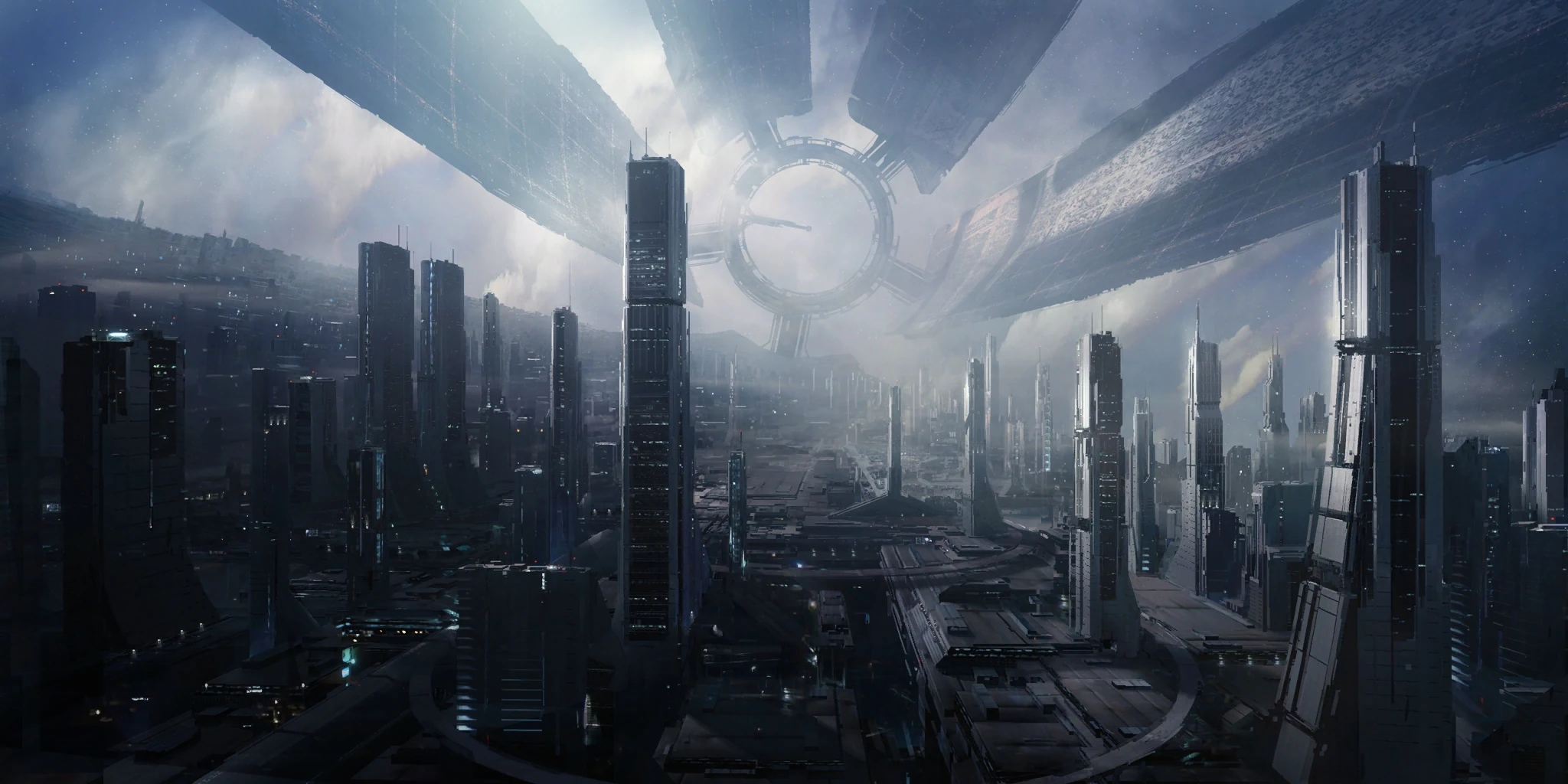
After "finalizing" the creature design rules for my home system, I've decided to go back and update the creatures that I've posted here to fall in line with the new set-up. A couple things that I'm noticing right off is that I'm probably going to need to increase many Attack Bonuses to factor in weapon skills. Also, I still haven't quite decided how I'm going to handle creature psionics yet. Plus, going through this process has alerted me to a few things that I need to address in other parts of the rules like the amount of Attack Bonus gain for putting points into Combat skills (no way is it going to be 1/1, probably +2/4) and I need to dial back the weapon damages for the added weapons in the gear chapter.
As always, these are works in progress, so they could change again!
Collector Drone
Size
|
Medium
|
Skill
|
+3
|
AC
|
15
|
Group
|
1d8
|
HD
|
3d8 (13 hp)
|
Save
|
14+
|
AB
|
+2
|
Move
|
30’, Fly 50’ (see below)
|
Dmg
|
2d6 energy rifle or 1d6 claws
|
INT
|
Low
|
Collector drones are the standard Collectors that most people hear about when tales of this species are told. They are armed with strange, organic looking, energy rifles. They can fly across short distances for one round before needing to land. They can fly again after a round of rest and their flight comes with a very noticeable buzzing sound.
Collector Drones can be controlled by a Collector General. These “Harbingers” take on an appearance of nearly bursting with energy. When a Collector General takes direct control of a drone, use the Harbinger stats below.
Collector Drones have limited cognitive abilities, but they do have access to the Stealth skill, but use of this skill is only applicable while walking, not while flying.
“Harbinger” Drone
Size
|
Medium
|
Skill
|
+10
|
AC
|
15
|
Group
|
1
|
HD
|
5d8 (21 hp)
|
Save
|
13+
|
AB
|
+4
|
Move
|
30’
|
Dmg
|
2d6 energy rifle or 1d8 claws or 3d6 psionic blast
|
INT
|
High
|
Harbingers are Collector Drones in which the Collector General has assumed control off. The transformation takes 1 round, during which the Drone can take no action. Collector Generals only take control of undamaged drones. The drone takes on an appearance as if it were bursting with energy. This transformation destroys the drone’s wings, making it incapable of flight. This level of control can be maintained for only 20 minutes before drone is completely consumed by the psychic energies fueling it. The drone is killed even if control is released before this time is up. The energies reduce the drone to ash.
When dealing with other species, a Collector General assumes control of a Drone. Outside of meeting a General, this is the only way that other species are able to converse with Collectors.
In addition to the increased stats, Harbingers can fire a blast of psionic energy every other round instead of making a regular energy rifle attack. Plus, the energy in their shells grants them a short of personal shield that ignores 4 points of damage from every attack that hits it. This is unlike typical personal shields that will decay with each hit as this level of damage reduction stays constant. Finally, the appearance of a Harbinger has a bolstering effect on any drones within 100’ of the Harbinger, granting them a +1 bonus to attack and damage rolls while a Harbinger is active.
Collector Generals can only assume control of one Drone at a time. Once either a Harbinger is destroyed by combat or by the psychic energy used to assume control, they cannot create another Harbinger for 1d6 rounds.
Collector General
Size
|
Large
|
Skill
|
+15
|
AC
|
14
|
Group
|
1
|
HD
|
7d10 (36 hp)
|
Save
|
10+
|
AB
|
+3
|
Move
|
20’
|
Dmg
|
1d6 claws
|
INT
|
High
|
Collector Generals are the rarely seen leaders of Collector groups. They typically stay aboard their starships, directing the flow of combat from the safety of their command centers. It is unknown if these are the highest form of Collector life, but they are the highest form currently known.
Outside of being able to control a drone, Generals appear to have very little in the way of combat ability. If anyone should enter into combat with a General, it will attempt to flee as quickly as possible, directing drones to keep the attackers at bay until a safe distance can be reached. Generals cannot take any actions while in control of a drone, so they will only do so when assured of their safety.
Collector Web
Size
|
Large
|
Skill
|
-
|
AC
|
12
|
Group
|
1
|
HD
|
2d10 (11 hp)
|
Save
|
12+
|
AB
|
Not Applicable
|
Move
|
20’ hover
|
Dmg
|
None
|
INT
|
Non
|
Collector Webs are creations of the Collectors to go where their Seeker Swarms (see entry) either cannot go for some reason or have been neutralized. The webs are not really webs; they are small energy transmitters that distort space and time in a small distance around their epicenter not unlike a very weak singularity. Dark energy writhes and coalesces around the center that looks somewhat like a mass of living webs (though some have said it looks like a flurry of bat-like creatures swarming around a central point) stretching out to a radius of 20’. Anyone caught in this web is slowed down to half movement speed, and will automatically fail any Evasion save attempts. Collectors use these creations to aid in the capture and defeat of enemy forces. The Collectors themselves appear to be immune to the effects of the Collector Webs.
The only real defense Collector Webs have is that their center, the only part of a Collector Web that is solid and attackable, is difficult to discern due to the writhing dark energy field. Anyone attacking a Collector Web suffers a -2 penalty to their attack roll.
Geth Trooper
Size
|
Medium
|
Skill
|
+12
|
AC
|
13
|
Group
|
1d6
|
HD
|
3d8 (13 hp)
|
Save
|
14+
|
AB
|
+3
|
Move
|
30’
|
Dmg
|
2d8 pulse rifle
|
INT
|
Very
|
These are the standard Geth platforms that most people think of when hearing about Geth. They are equipped with pulse rifles and personal shields (5). If they take no actions during 1 round, geth troopers can instantly recharge their shields to full capacity. Most are armed with pulse rifles, but some also take to high ground with mag rifles to snipe at targets.
Geth Troopers are skilled in Computers, Stealth, and Tech (robotics).
Geth Armature
Size
|
Huge
|
Skill
|
-
|
AC
|
18
|
Group
|
1
|
HD
|
10d10 (51 hp)
|
Save
|
8+
|
AB
|
+7
|
Move
|
20’
|
Dmg
|
3d6 heavy pulse guns or 4d8 siege cannon
|
INT
|
Very
|
Geth Armatures are anti-personnel light walkers armed with heavy pulse rifles and a siege cannon. Siege cannons can only be fired once every 5 rounds. Against non-heavy weaponry, geth armatures are considered to have Armor 6. They are also equipped with Personal Shields (7).
Geth Colossus
Size
|
Gargantuan
|
Skill
|
-
|
AC
|
20
|
Group
|
1
|
HD
|
15d12 (91 hp)
|
Save
|
4+
|
AB
|
+17
|
Move
|
20’
|
Dmg
|
3d6 heavy pulse guns or
5d10 heavy siege cannon
|
INT
|
Very
|
Geth Colossi are heavy walkers armed with heavy pulse guns and a devastating heavy siege cannon. Siege cannons can only be fired once every 5 rounds. Against non-heavy weaponry, geth colossi are considered to have Armor 8. They are also equipped with Personal Shields (9).
Geth Destroyer
Size
|
Medium
|
Skill
|
-
|
AC
|
15
|
Group
|
1d2+1
|
HD
|
6d8 (25 hp)
|
Save
|
12+
|
AB
|
+5
|
Move
|
30’
|
Dmg
|
3d8 spike thrower or
3d10 rocket launcher or
2d8 plasma projector
|
INT
|
Very
|
Geth Destroyers are close combat units that are equipped with Personal Shields (6). They will wield either spike throwers, rocket launchers, or plasma projectors.
Geth Hopper
Size
|
Medium
|
Skill
|
+12
|
AC
|
13
|
Group
|
1d3
|
HD
|
3d8 (13 hp)
|
Save
|
14+
|
AB
|
+3
|
Move
|
30’, 20’ leap, 20’ wall-crawl
|
Dmg
|
2d8+2 mag rifle
|
INT
|
Very
|
Geth Hoppers are infiltration, espionage, and sniper units. They can leap up to 20’ and are capable of clinging even to shear surfaces. They are equipped with a shoulder-mounted mag rifle. Hoppers are also proficient in Computers and Stealth, allowing them to slip into enemy installations and take out automated defenses or to perform other acts of cyberwarfare. Geth Hoppers are also equipped with sensor jamming equipment that affects motion sensors, EMP detectors, and radio communication.
Geth Hunter
Size
|
Medium
|
Skill
|
+12
|
AC
|
14
|
Group
|
1d3
|
HD
|
5d8 (21 hp)
|
Save
|
13+
|
AB
|
+4
|
Move
|
30’
|
Dmg
|
3d8 spike thrower
|
INT
|
Very
|
Geth Hunters are close combat and infiltration units. They wield spike throwers, and have Personal Shields (6). Hunters are also equipped with personal cloaking devices. It doesn’t make them completely invisible, but only a faint shimmering outline is noticeable. This grants them a +6 bonus to Stealth checks, plus any enemies using ranged attacks against a cloaked hunter do so with a -3 penalty. In order to even recognize that a Hunter is incoming an enemy must make a successful Perception check against the Hunter’s Stealth check (higher roll wins). Once a cloaked Hunter has taken damage or has attacked, the cloaking is shut off and the hunter can be seen plainly.
Geth Juggernaut
Size
|
Medium
|
Skill
|
-
|
AC
|
16
|
Group
|
1d2
|
HD
|
7d8 (29 hp)
|
Save
|
12+
|
AB
|
+5
|
Move
|
30’
|
Dmg
|
3d6 heavy pulse rifle or 3d10 rocket launcher
|
INT
|
Very
|
Similar to Destroyers, Juggernauts are powerful geth units armed with heavy pulse rifles with rocket launching attachments. They are typically equipped with 3 rockets, but some may carry more. They have Personal Shields (8).
Geth Prime
Size
|
Large
|
Skill
|
-
|
AC
|
18
|
Group
|
1
|
HD
|
12d10 (61 hp)
|
Save
|
7+
|
AB
|
+8
|
Move
|
30’
|
Dmg
|
3d6 heavy pulse rifle or 3d10 rocket launcher
|
INT
|
Very
|
Geth Primes are command units. They are armed with heavy pulse rifles with rocket launching attachments. Most Primes carry 5 rockets, but some with carry more. They have Personal Shields (10) and are capable of jamming detection devices and radio comms like Hoppers. Plus, Primes coordinate the attacks of other geth within 80’, granting them a +2 attack bonus while they are within range.
Banshee
Size
|
Large
|
Skill
|
+16
|
AC
|
17
|
Group
|
1d2
|
HD
|
8d10 (41 hp)
|
Save
|
9+
|
AB
|
+6 (claws)
+8 (energy blast)
|
Move
|
20’ or 60’ Jaunt
|
Dmg
|
1d10 claws or 2d6 + special energy blast or 3d6 shockwave
|
INT
|
Very
|
Banshees are the corrupted asari often found leading a Nano-Terror strike force. The Reapers create them specifically from asari with active or latent predispositions to becoming Ardat-Yakshi, a rare neurological condition that enhances the asari's psionic power while causing the immediate death of anyone she mates with.
Lumbering as though in constant pain, the emaciated banshees are surprisingly durable opponents. They are devastating psions able to hurl lethal balls of energy and create shockwaves as they regenerate. What Alliance military finds most disturbing is the Banshee's ability to spawn her own warp field and seemingly teleport during combat. Although their wails have no apparent physiological effect, the psychological impact is undeniable.
When banshees die, their Ardat-Yakshi genetics twist against them, causing a biotic implosion to ensure they evade capture as their bodies wither away to dust quickly.
Banshee energy blasts have a range of 100 meters. Since they are slow moving, but hone in on targets, the attack roll when using a energy blast is increased by +2 (factored in above), but the target can make an Evasion save to avoid damage. If a target is hit with an energy blast, he must make a Physical Effect save or be dazed for 1 round. They regenerate 3 hit points per round, and release a shockwave that affects all non-Nano-Terror beings within 30 feet of them after regenerating (and doing nothing else) for 2 rounds. They have 15 Psionic Points to use on their Jaunt ability, and these points regenerate at a rate of 1 point per round, even while engaging in other attacks.
Brute
Size
|
Large
|
Skill
|
-
|
AC
|
19
|
Group
|
1d2
|
HD
|
10d10 (51 hp)
|
Save
|
8+
|
AB
|
+7
|
Move
|
20’ or 40’ Charge
|
Dmg
|
2d10 claws
|
INT
|
Low
|
The brute is a hulking amalgamation of turian and krogan victims of the Nano-Terrors. Because tissue from dextro-protein species like the turians is incompatible with levo-protein species like the krogan, implants regulate the brute's body chemistry to combat organ rejection.
It is the fusion of turian military skill and krogan blood rage that makes the brute such a formidable enemy, capable of destroying armored vehicles to get to the soldiers inside. Troops are advised to keep their distance, and, whenever possible, not engage a brute alone.
Brutes are so heavily armored that they ignore 4 points of damage done from any non-heavy weapon. Plus, their claws are so tough that they can ignore 5 points of armor on vehicles (consider Gravtanks to have 12 points of Armor against Brute attacks).
Cannibal
Size
|
Medium
|
Skill
|
-
|
AC
|
12
|
Group
|
1d8+2
|
HD
|
3d8 (13 hp)
|
Save
|
14+
|
AB
|
+2
|
Move
|
30’
|
Dmg
|
2d6 energy pistols
|
INT
|
Average
|
Cannibals are front-line Nano-Terror units created from corrupted batarians. The nickname refers to their propensity to devour the bodies of fallen comrades. This triggers a biochemical process through which the cannibals simultaneously heal themselves and grow new chitinous armor. The transformation also appears to give cannibals a greater awareness of their surroundings, leading to more strategic behavior and careful use of battlefield cover.
When devouring fallen Nano-terror units, cannibals heal 5 points of damage and add 1 point of armor to their AC. They can do nothing else while doing this and being attacked does not halt the process. They can only add 4 points of armor by devouring fallen nano-terrors.
Harvester
Size
|
Gargantuan
|
Skill
|
-
|
AC
|
18
|
Group
|
1
|
HD
|
13d12 (79 hp)
|
Save
|
5+
|
AB
|
+13
|
Move
|
30’ or 60’ Fly
|
Dmg
|
4d10 2 energy cannons
|
INT
|
Semi
|
The sight of a Harvester in flight nearby is one of the first indications that a Nano-Terror invasion is underway. Their massive wingspan allows them to quickly cover the distance between them and their prey.
In the Harvester's mouth are two heavy guns that fire in an alternating pattern. The Harvester's most fearsome quality, however, is that its appearance guarantees that Nano-Terror ground troops are not far behind.
Husk
Size
|
Medium
|
Skill
|
-
|
AC
|
13
|
Group
|
2d10
|
HD
|
2d8 (7 hp)
|
Save
|
14+
|
AB
|
+1
|
Move
|
30’
|
Dmg
|
1d4/1d4/1d6 claw/claw/bite
|
INT
|
Semi
|
Husks are the aggressive, mindless foot soldiers of the Nano-Terror armies. They are created by impaling either living or dead humans (and near-humans) on mechanical spikes that rapidly extract water and trace minerals and replace them with cybernetics. These cybernetics reanimate the lifeless flesh and tissue, transforming the bodies into horrifying killing machines.
The Nano-Terrors use large groups of husks to overwhelm the enemy. The husks' inability to feel pain, as well as their tendency to attack in groups, makes them particularly deadly adversaries.
Husk Abomination
Size
|
Medium
|
Skill
|
-
|
AC
|
14
|
Group
|
1d2+1
|
HD
|
4d8 (17 hp)
|
Save
|
13+
|
AB
|
+2
|
Move
|
30’
|
Dmg
|
1d4/1d4/1d8 claw/claw/bite
|
INT
|
Semi
|
Abominations are Husks that are imbued with explosives that go off whenever they are made non-functional, spreading super-hot plasma over a 40’ area for 2d10 damage. Their bite attacks are more deadly thanks to the high temperatures in their bodies making their already sharp teeth exceedingly hot as well.
The only visual difference between a Husk and an Abomination is some of the cybernetic wiring is red in color. Plus, they give off a very perceptible wave of heat to those in melee range.
Marauder
Size
|
Medium
|
Skill
|
+15
|
AC
|
15
|
Group
|
1d6
|
HD
|
5d8 (21 hp)
|
Save
|
13+
|
AB
|
+4
|
Move
|
30’
|
Dmg
|
2d10 pulse rifle
|
INT
|
Very
|
Marauders are harvested turians that command and protect other Nano-Terror troops. The lean, armored creatures present a significant threat in and of themselves, but they are especially dangerous when leading a task force.
Alliance marines have observed marauders fortifying husks and cannibals by enveloping them in a ribbon of energy that forms a scabby shell of armor. For this reason, when Alliance soldiers encounter a marauder alongside husks or cannibals, standing orders are to target the marauder first.
If a marauder does nothing else for one round all other Nano-Terror units within 20’ get a +2 bonus to AC until they are damaged. Plus, due to the hive-mind that all Nano-Terrors share, any Nano-Terrors within 50’ of a Marauder have their actions coordinated, granting them a +2 bonus to attack rolls while a Marauder is still in action.
Marauders also have access to the Stealth skill and can use it with a +2 bonus.
Ravager
Size
|
Medium
|
Skill
|
-
|
AC
|
16
|
Group
|
1d2
|
HD
|
6d8 (25 hp)
|
Save
|
12+
|
AB
|
+4
|
Move
|
20’
|
Dmg
|
3d6 2 energy cannons
|
INT
|
Low
|
Ravagers are former rachni that the Nano-Terrors have transformed into heavy artillery through a process of implantation and genetic modification. As walking organic turrets, they can sustain and inflict considerable damage.
Ravagers bear egg sacs that spawn swarmers. If the sacs are destroyed, either during combat or upon the ravager's death, their entire contents burst forth to charge the enemy and explode on contact. A dead ravager expels a caustic gas and an acidic puddle.
Alliance scientists have theorized that it is easiest for the Nano-Terrors to maintain control over units of rachni genetic extraction because of the species' neurological predisposition for hive-mind consensus.
Unless targeted by a called shot, there is a 25% chance each time a Ravager takes damage that a swamer sack has burst. Anyone directly adjacent to a Ravager when a swarmer sack bursts suffers 1d6 points of damage from the acid. See the Swarmer entry for details, but each sack holds 3 swarmers. Once 4 sacks have burst, no others will.
Swarmers
Size
|
Diminitive
|
Skill
|
-
|
AC
|
10
|
Group
|
3d6
|
HD
|
1d4 (3 hp)
|
Save
|
19+
|
AB
|
+0
|
Move
|
20’
|
Dmg
|
1d4 explosion
|
INT
|
Animal
|
Swarmers are synthetic-organic creatures presumably derived from Rachni Workers and mutated by Nano-Terror technology. Swarmers can be spawned by puncturing one of the large orange sacs found on Ravagers or by destroying Gestation Pods.
Swarmers are not generally dangerous on their own. Their only attack method is to leap at foes and explode. Their real danger comes from several leaping at the same foe, which can quickly dwindle armor and health.
Praetorian
Size
|
Huge
|
Skill
|
-
|
AC
|
18
|
Group
|
1
|
HD
|
12d10 (61 hp)
|
Save
|
7+
|
AB
|
+6
|
Move
|
30’
|
Dmg
|
3d6 particle beam or 4d8 Death Choir (see below)
|
INT
|
Low
|
The Praetorian is a slow-moving flying Collector construction that consists of thirty deformed Husks fused together. It is armed with powerful particle beams, and protected by powerful armor (equivalent to vehicle armor 5).
The Praetorian’s most fearsome attack (as if its particle beams weren’t enough) is its Death Choir. If foes are within 30’ of a Praetorian, it will drop to the ground crushing anyone beneath it for 3d6 points of damage that fail an Evasion save to dodge out of the way. After a round of charging up (during which it cannot do anything else), it unleashes a blast of energy that does 4d8 points of damage to all within 30’ of the Praetorian.
Scion
Size
|
Large
|
Skill
|
-
|
AC
|
16
|
Group
|
1d2
|
HD
|
8d10 (41 hp)
|
Save
|
9+
|
AB
|
+4
|
Move
|
20’
|
Dmg
|
3d10 scion cannon
|
INT
|
Low
|
Though the exact fate of species captured by the Collectors is unclear, the humanoid appearance of the scions gives ghastly clues. The scion's frame and skull are similar to those of a human or asari, but the bone structure is overlaid with a metallic resin. Posthumous examination of their bodies reveals a skin tone resembling that of husks, but their transformation process seems more extensive. Like husks, they are cybernetically modified on a nano-scale so they can operate even in hard vacuum. Hoses rather than veins and muscle tissue join major portions of the body together. One arm is replaced with a construct that fits a large rifle, turning the creature into a humanoid weapons platform, and a fleshy sack is supported by the creature's back and head.
These sacks contain brain matter and spinal tissue, too much to have come from just one victim. This indicates scions are an amalgam of several individuals, with one primary victim providing the frame and several "secondaries" providing the flesh for a decentralized semi-mechanical nervous system. This decentralization makes them highly resistant to gunshot wounds; even a headshot is not a certain kill.
The scions' weapons, however, indicate that scions retain some living tissue, or at least sustain some of the same cerebral functions as those of a human psychic. The weapon creates a powerful warp effect. Given the rarity of human psychics, it seems likely that these abominations are granted their psychic abilities through the combination of numerous victims, rather than requiring a psychic victim in the first place.
Scion cannons affect all targets in a line up to 50 meters away. They feel little pain which grants them the ability to ignore 5 points of damage from any attack they suffer.
Seeker Swarms
Size
|
Large
|
Skill
|
-
|
AC
|
18
|
Group
|
1
|
HD
|
5d10 (26 hp)
|
Save
|
11+
|
AB
|
+2
|
Move
|
50’ fly
|
Dmg
|
1d3 sting + Stasis
|
INT
|
Non
|
Seekers are insects bred by the Collectors for use in attacks on colonies to collect specimens for their mysterious uses. An individual Seeker is a dangerous foe in and of itself, but the Collectors release them in swarms, and typically enough swarms to quickly cover and affect a small colony at once. They are large for an insect, about the size of an adult human’s fist. They are also highly aggressive. When a non-Collector lifeform is in sight, they will swoop in and attempt to sting their target; their venom causing a sort of stasis effect of near complete paralysis with only the victim’s eyes being able to move. Seekers have enough venom for 20 stings, once that venom is used up a Seeker dies.
A Seeker Swarm is a mass of flying seekers. Anything living that comes in contact with a Seeker Swarm is automatically attacked. The swarm’s attack roll ignores the AC of any armor that does not fully enclose the wearer, so Leather Jacks and even open helmed Combat Armor does not offer any protection, but Assault Suits and Power Armor does. Deflector Arrays and Personal Shields do not affect Seekers, but a psychic’s Kinetic Shield power will hold Seeker Swarms at bay.
Those that take damage from a Seeker swarm sting must make a Physical Effect save or become perfectly, and instantly rigid. The victim can move his or her eyes and is totally aware of everything going on around them. Psychic victims are unable to use psionic powers.
A swarm that has taken enough damage to be “killed” doesn’t mean that all seekers in the swarm are killed, but have been scattered enough to not be a threat. However, if there are at least three swarms within 100’ of each other that have been scattered, they will reform into a new swarm after 2 rounds from the scattering of the third swarm.
Soul Hunter
Size
|
Medium
|
Skill
|
+16
|
AC
|
14 or 12/10 (Woven or
Leather Jack)
|
Group
|
1
|
HD
|
4d8 (17 hp)
|
Save
|
13+
|
AB
|
+2
|
Move
|
30’
|
Dmg
|
1d6 laser pistol
|
INT
|
Very
|
Soul Hunters are a humanoid construct from an unknown sector of space. Even so, they have been known to the oldest space-faring peoples across the galaxy for as long as any can remember. They have human-like faces, but their craniums are much larger and are typically bald or only have hair growing on the side of their heads and on their faces as standard beards and moustaches as many other humanoid species. In the center of their foreheads is what looks like a mineral growth. These “gems” are typically yellow in color. Soul Hunter flesh is typically pale and their eyes are usually steel gray or light blue in color. Hair color is usually gray.
Soul Hunters are a mysterious species that illicit a variety of reactions from other species when they learn of their “mission.” Soul Hunters can sense the impending deaths of those around them with a certain level of knowledge and awareness. They seek out these individuals to absorb their mental energies at the time of death or very shortly thereafter in order to have the being live on in a virtual paradise. Among many species with religious traditions that revolve around a spiritual afterlife, this practice of absorbing mental energies is abhorrent and blasphemous as it is seen as keeping the person’s soul from being able to be with its god or gods or what-have-you. Other less spiritual species either scoff at the idea or see the strange beings as morbid. Many don’t believe that they can sense the deaths of others, but instead choose a target and either set up their deaths or kill them themselves. As far as the technology of capturing mental energy, the technology of imprinting a person’s mind and behavior patterns does exist, but it is a long and difficult process, not something that can be accomplished in a few seconds and on a corpse.
Soul Hunters use small devices of unknown make placed on the recently deceased’s foreheads to collect that person’s mental energy. The target cannot be more than 10-15 minutes dead, so Soul Hunters make others nervous when they are known to be in the area. Once a person’s mental energy is captured, they take them back to their starships and leave the area. They claim that the deceased live on in virtually constructed paradises where the deceased can “live” on to continue to create and a “thrive” so that the galaxy does not lose their genius. Most of the targets of Soul Hunters are obvious: political leaders, scientists, military commanders, religious leaders, innovators, etc., but some of the targets aren’t well known, some are even downright common or lowly beings. Soul Hunters say that just because society does not know of a being’s genius doesn’t mean that their genius should be lost forever. This only solidify the skepticism as to if the Soul Hunters are doing anything really at all, making them eccentric and morbid, but largely harmless galactic travelers.
Virtually nothing is known about Soul Hunters beyond what the beings have said of themselves. Their homeworld, society, and technology are a mystery. What is known is that they are a very advanced sort of android, but who created them is a mystery as well. They are beyond the technology of all other known forms of android intelligence. They are constructed in a way that they are like living beings in nearly every way, though they have no need to eat, breathe, and drink and they are immune to all forms of toxins and disease. They do not register as a mechanical being on scanners and they have psionic powers. One flaw in their make-up is that they cannot heal damage. They must return to their starships to repair damage, and must do so once every seven days to recharge.
The Minbari have gathered the most information on the Soul Hunters, who see the beings as a great threat to any Minbari who draws their attention. They attack Soul Hunter ships on sight and they are considered among the most heinous of monsters to inhabit the galaxy as they can keep the dead from attaining peace described by the great Minbari prophet, Valen. When a Minbari is taken by a Soul Hunter, they stop at nothing to regain the device the deceased’s mind is stored on in order to free it. Few Soul Hunters have escaped with a Minbari mind, but some have and it is for that reason that the Minbari have a task force dedicated to discovering where the Soul Hunters congregate. They suspect that they have a centralized location where all the soul devices are stored since Soul Hunters that have escaped initially have been captured at later times, but without the soul device that the Minbari were wanting to free. However, it is possible that each Soul Hunter has his own base of operations.
Soul Hunters are generally peaceful. They do not attack without provocation unless they are being kept from getting to their deceased target. In such cases, they will eliminate anyone that attempts to impede their progress, especially those that they deem as “inconsequential” to the galaxy. They understand their reputation and take pains to conceal their presence in areas where beings are hostile to them, even to the point of sneaking about or disguising their appearance. They see their task as one of galactic importance, one that must be completed even if other species fear them or do not understand. They also seem to work alone unless the target is one of great importance and they expect more resistance that a single Soul Hunter can handle, but such cooperation between Soul Hunter is rare. If they miss their opportunity to collect a soul, they appear distraught for a moment, but then leave the area (unless there is another soul in the vicinity to collect).
It is surmised that Soul Hunters can psychically sense when someone of great importance is about to die. This is a power that is so far beyond that of even the most powerful precognizant psychic. (For game purposes, the effects of this power are left up to the GM. Essentially, if a Soul Hunter is sulking about, someone is in serious danger.)
Soul Hunters have access to the Precognition Psionic powers up to Level 3. They have 20 power points to spend on their powers.
Soul Hunters typically have the Computer and Stealth skills, some of them are very, very old and could have access to any number of skills the GM sees fit.
Varren
Size
|
Medium
|
Skill
|
-
|
AC
|
13
|
Group
|
1d6
|
HD
|
3d8 (13 hp)
|
Save
|
13+
|
AB
|
+2
|
Move
|
40’
|
Dmg
|
1d8 bite
|
INT
|
Animal
|
Varren are omnivores with a preference for living prey. Originally native to the krogan homeworld of Tuchanka, they are, like most life from Tuchanka, savage, clannish, and consummate survivors. They are pack hunters when vulnerable prey is readily available and become scavengers when outnumbered or outclassed.
Their supreme adaptability, vicious demeanor, and rapid breeding cycle have made them ubiquitous and dangerous pests on many worlds. Virtually everywhere the krogan have been, varren infestations have followed, wreaking havoc with the native ecology.
The krogan have had a love-hate relationship with varren for millennia, alternately fighting them for territory and embracing them as treasured companions. To this day, krogan raise them as beasts of war. A common subgenus of varren has metallic silver scales, leading to the rather unusual nickname 'fishdogs'.